On this page
Humax MX7 Review
Key Features at a Glance
- 7.4kW single-phase charging, adding roughly 25 to 28 miles of range per hour
- V2G-ready via ISO 15118 and an integrated PLC module, rare among AC home chargers in the UK
- RFID access control, two cards included, prevents unauthorised charging
- 2025 London Design Awards Gold, independently recognised design quality
- Three cable configurations: untethered (socket), tethered 5m, or tethered 7m
- OTA firmware updates, so the charger can gain features over its lifetime
- Load management: static load management built in, dynamic load balancing via the CT clamp
- 5-year warranty when you register the product online
- OZEV eligible: up to £500 off installation for eligible renters and flat owners
Is It Worth It?
The Humax MX7 offers a long feature list for the money. V2G-ready hardware, RFID access control with two cards, interchangeable fascia panels, a London Design Award, a five-year warranty on registration, solar surplus charging, and OTA firmware updates.
The Humax MX7 makes most sense for buyers who want a well-engineered home charger with V2G-capable hardware with practical access control, and who understand that V2G, though the hardware is in place, is not yet active in the UK.
The Humax name carries less weight in the EV charging market than it does in consumer electronics. For buyers who evaluate on engineering and feature depth, the MX7’s specification speaks clearly.
Charging Performance
Power Output and Cable Options
The MX7 charges at 7.4kW single-phase, adding roughly 25 to 28 miles of range per hour, sufficient for a full overnight charge on most modern EVs. There is no three-phase option.
Three cable configurations are available: untethered (socket), tethered with a 5m cable, or tethered with a 7m cable, each priced a step above the last. The 7m tethered version adds useful reach for awkward parking positions or cars with rear charge ports parked at an angle. The untethered socket version gives flexibility to use different cable lengths or accommodate different vehicles. The socket version is rated IP54 and the tethered version IP65, both with IK10 impact protection.
Design and Build
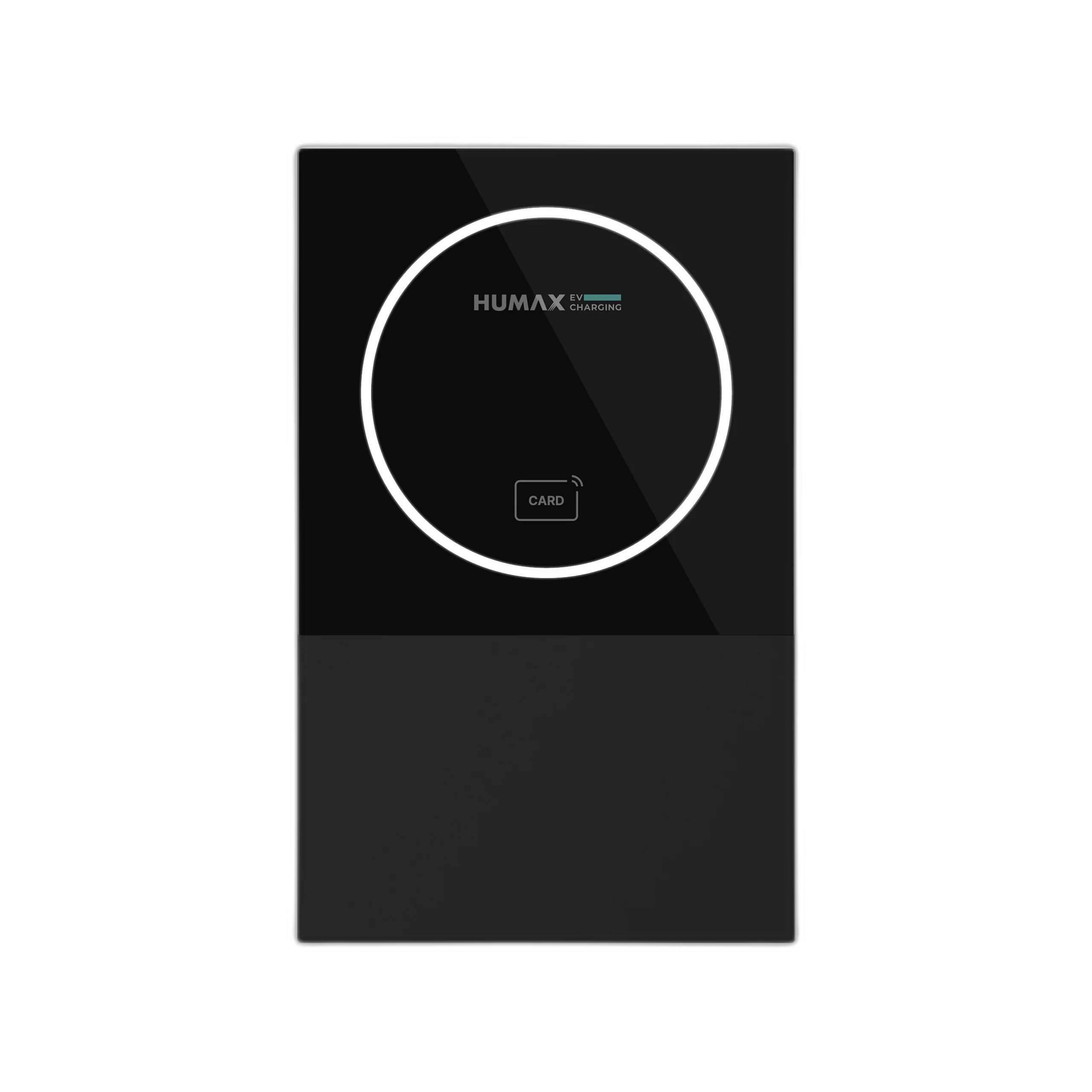
The MX7 won the 2025 London Design Awards Gold for its design quality. The hinged front panel provides easy access during installation and maintenance, a practical improvement over units that require housing removal.
The front fascia is interchangeable, and Humax sells additional deco panels in other colours so you can change the look of the unit on the wall.
Two RFID cards are included. These allow the charger to restrict use to known cards, preventing unauthorised charging, which is particularly useful on shared driveways or properties accessible from the street. The integrated PLC module and ISO 15118 protocol enable smart vehicle recognition and secure user authentication.
Load Balancing
Static load management is built in, and dynamic load balancing is available with the addition of Humax’s CT clamp. With the clamp fitted, the charger monitors your household’s total electricity demand and adjusts charging speed to prevent drawing more than your supply can support, useful for older properties or those with a lower supply rating.
Installation Note: Connectivity and the CT Clamp
The MX7 connects over Wi-Fi, Bluetooth LE, or wired Ethernet, with 4G available as an option, and supports OCPP 1.6J. If Wi-Fi is unreliable at the install location, a wired Ethernet run is the fallback worth planning for.
Dynamic load balancing and household energy monitoring use a CT clamp, which Humax sells as an accessory. Confirm with your installer whether the clamp is included in your installation quote before booking.
Smart Features and App
Humax Charge App
The Humax Charge app provides scheduling, remote monitoring, live status updates, and energy usage tracking. You can set charging times to align with your tariff’s off-peak window, check live session data, and receive notifications on charge progress. OTA firmware updates mean the charger’s functionality can improve over time without requiring any action; it updates itself automatically.
Confirm current smart tariff integrations, including whether Octopus Intelligent Go is supported, directly with Humax before purchasing, as specific API partnerships were not confirmed in research for this review.
V2G, Solar and Future-Proofing
What V2G-Ready Means for the MX7
The MX7 includes an integrated Power Line Communication (PLC) module and the ISO 15118 communication protocol, the hardware and software standard required for vehicle-to-grid (V2G) energy flow. In a working V2G system, your EV’s battery would export electricity back to your home or the national grid during peak demand periods.
V2G-ready hardware remains rare among AC home chargers sold in the UK, and the MX7 is one of the few to include it as standard.
The Honest V2G Caveat
As of mid-2026, V2G over AC is not active in the UK. Humax notes that V2G functionality will depend on future certification and compatible vehicles in the UK, and that selling power back to the grid may require a software subscription. Compatible vehicles are scarce, V2G tariffs from energy suppliers are not widely available, and DNO export approval (the G99 process) adds an extra administrative step.
The value of the V2G hardware today is that you will not need to replace the charger when V2G does become available.
Solar Integration
The MX7 supports solar surplus charging, directing spare PV generation to your EV rather than exporting it to the grid. Confirm the exact installation requirements, including the CT clamp, with your installer before booking. OTA firmware updates mean that solar functionality can be enhanced over time as Humax develops the software platform.
How It Compares
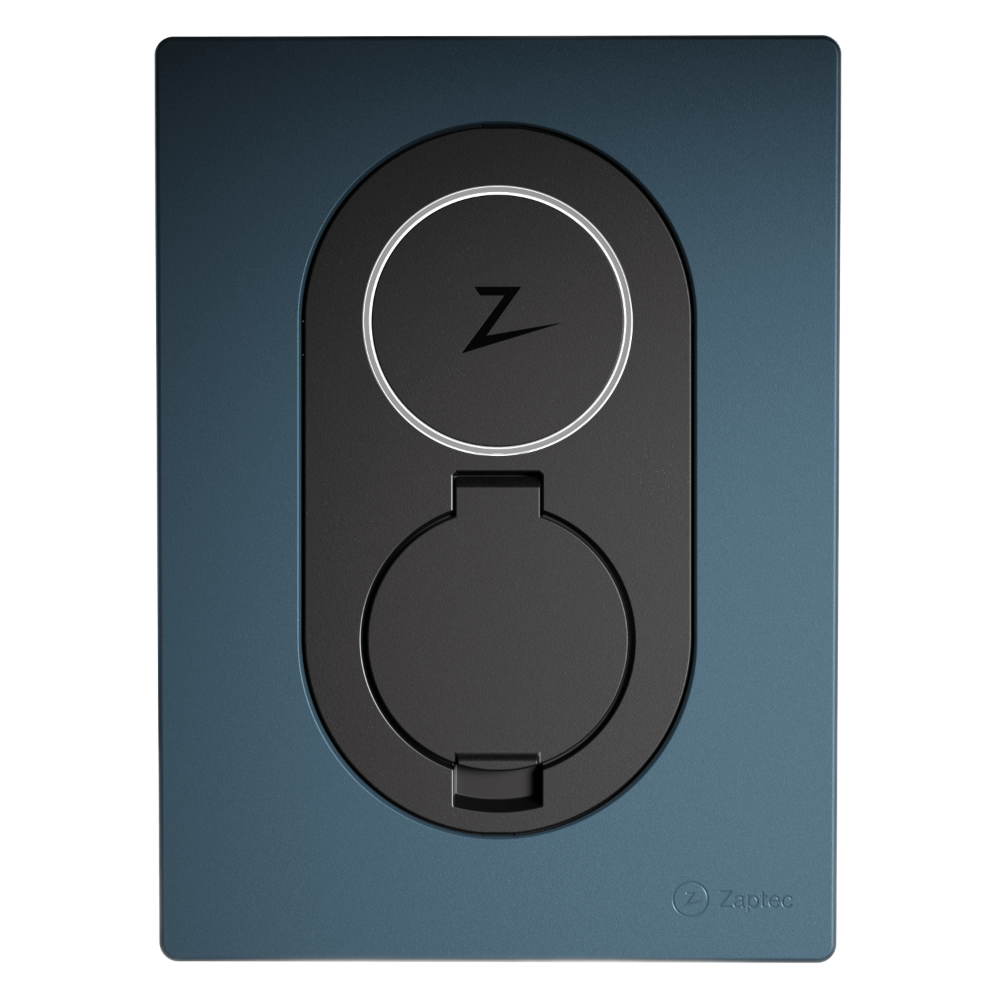
Humax MX7 vs Zaptec Go 2
Both are V2G-ready home chargers at a similar price range. The Zaptec Go 2 adds subscription-free 4G built in and a MID-approved energy meter, a meaningful advantage for buyers making business mileage claims or working in Wi-Fi dead zones. The Humax MX7 adds RFID access control (with two cards included), interchangeable fascia panels, a London Design Award, and availability in tethered as well as untethered configurations.
If MID metering or built-in 4G are the priority, the Zaptec has the edge. If RFID access, design recognition, and tethered cable convenience matter more, the Humax is the stronger buy.
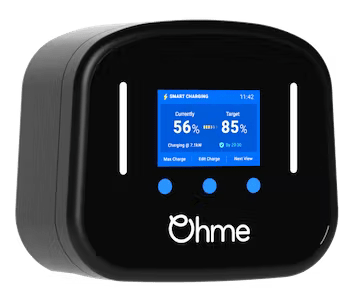
Humax MX7 vs Ohme Home Pro
The Ohme Home Pro is the right choice if automated smart tariff savings are your main goal. The Humax wins on V2G readiness, RFID access control, warranty duration (5 years vs 2 years), and the OTA update architecture.
FAQs
What is the Humax MX7 EV charger?
A 7.4kW home EV charger from Humax, a consumer electronics manufacturer with over 35 years of experience. It went on sale in the UK from June 2025, is V2G-ready via ISO 15118, includes RFID access control, and won the 2025 London Design Awards Gold. Available in untethered, 5m tethered, and 7m tethered versions.
Is the Humax MX7 OZEV approved?
Yes. All MX7 models are OZEV approved. Eligible renters and flat owners can claim up to £500 off the installation cost through the EV chargepoint grant.
Does the Humax MX7 support solar charging?
Yes. The MX7 can charge from surplus solar generation. Confirm the installation requirements, including the CT clamp, with your installer before booking.
What is the warranty on the Humax MX7?
5 years when you register the product online. Confirm the full terms on the Humax website before purchasing.
Is the Humax MX7 V2G compatible?
The MX7 includes the hardware required for vehicle-to-grid energy transfer. However, V2G is not yet active in the UK. Activation depends on future software development, compatible vehicles, and local grid infrastructure. A software subscription may be required when V2G becomes available.
Can I track usage for multiple users?
The charger authenticates individual users by RFID card, so charging sessions can be tracked per card in the app, useful for shared driveways. Confirm the exact reporting features with Humax if itemised billing matters to you.