
On this page
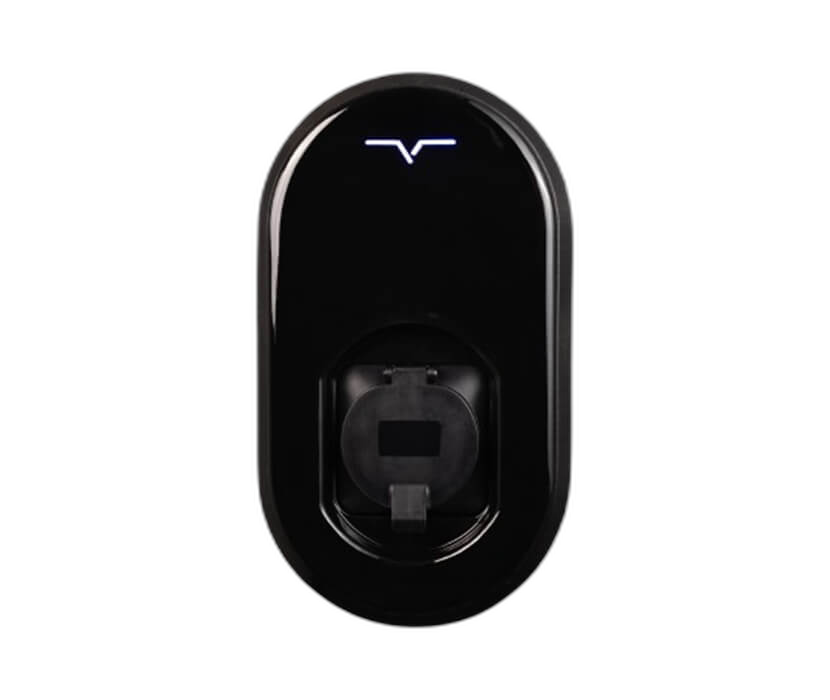
The VCHRGD Seven Pro is a smart home EV charger built for UK drivers who want a compact 7.4kW unit with solar support, tariff control, and flexible installation. With its elegant design, it’s crafted to complement modern homes, focusing on simple operation and secure access for everyday home charging.
If you’re weighing up home charging options, this one lands in the practical, feature-rich camp rather than the flashy lifestyle category. It’s a good fit if you want smart charging, Type 2 compatibility, and something that’ll look neat on your driveway, in your garage, or even in a shared parking space.
At a Glance: What This Charger Offers
The VCHRGD Seven Pro is a 7.4kW charger that covers most home charging needs in the UK. It’s built for Type 2 EVs and you can pick tethered or untethered, depending on your preference for cable convenience or flexibility. As a newer brand, VCHRGD may have a smaller installer network compared to long-established brands in the industry.
VCHRGD does not publish a headline retail price on its own site; the tethered version comes with a 7.5-metre cable and the untethered version is usually the cheaper of the two, with current pricing available from VCHRGD’s shop and its approved installers.
It’s all about smart charging, solar integration, and straightforward use at home. The compact design, app control, and features make it just as handy for daily charging as for more managed, shared setups, and it is generally positioned at the value end of the smart charger market.
Charging Speed, Power Output, and Home Suitability
Rated at 7.4kW, it enables fast charging for most home users, matching the typical single-phase home charging speed for UK houses. In real life, that usually means you’re sorted with overnight charging if you plug in regularly.
It works for homes with driveways, garages, or even on-street setups, assuming your electrics and property layout allow for installation.
Tethered and Untethered Model Differences
The tethered unit has a fixed 7.5-metre Type 2 cable, which provides enough reach for most setups, so you can just plug in and go, making it convenient if you’re charging the same car most days.
Go untethered and you’ll use your own cable, which is handy if you have multiple cars, lease vehicles, or just want a tidier wall unit.
Design, Size, and Everyday Usability
The Seven Pro keeps things compact, with a black finish that doesn’t scream for attention. The unit measures 300mm x 180mm x 90mm, housed in an IK10-rated impact-resistant enclosure.
If you want a charger that’s easy to live with, that compact footprint counts for something.
Smart Features, App Control, and Tariff Support
This charger is all about remote control and energy-aware charging. With built-in Wi-Fi and Bluetooth connectivity, the Seven Pro offers app integration and remote management, letting you control your charger from anywhere using a smartphone app. You can schedule sessions, monitor energy usage, and manage charging from your phone, with firmware updates handled over the air. Wi-Fi and Bluetooth come as standard, with optional 4G connectivity available for areas with weak Wi-Fi signals.
It supports tariff-led charging through the app and compatible third-party platforms. If you’re already on a smart tariff or thinking about it, that’s a plus.
Schedule Charging and Smart Scheduling Tools
You can set charging times to hit cheaper off-peak windows, aligning your charging schedule with EV tariffs to cut costs. Smart scheduling means you don’t have to micromanage, just set it up and let the charger handle the rest.
Tariff Compatibility With UK Off-Peak Plans
The Seven Pro is set up for smart tariff compatibility, with VCHRGD listing integration with Intelligent Octopus Go and OVO Charge Anytime. Note that VCHRGD states these integrated tariffs require a compatible vehicle to work with the Seven Pro. With Intelligent Octopus Go, users can access lower charging rates during off-peak hours; VCHRGD cites rates from 7p per kWh on that tariff, though rates are set by the supplier and can change. It also works with Powerverse app environments and other back-end systems.
Always double-check the tariff requirements before buying. Some plans need both the car and charger to work together in a certain way.
App Features, Cost Tracking, and Software Updates
The VCHRGD app lets you control charging, set schedules, and see your energy use. Over-the-air updates keep the software current, so you’re not left behind.
Cost tracking is built in, so you can get a real sense of what you’re spending on charging, much more accurate than just guessing from your energy bill.
Solar Charging and Energy Management
The Seven Pro is built with solar homes in mind, including those planning to add panels soon. It supports solar integration, allowing you to use surplus solar energy from your panels to charge your electric vehicle. Using one or two CT inputs, the charger monitors solar export so it can charge from excess generation, enabling you to charge with renewable energy at little or no marginal cost.
If you’re thinking about a future where your EV charger is at the heart of your home energy setup, this model’s a solid pick.
Solar Integration Modes and Solar Compatibility
Solar integration lets you use surplus generation more efficiently, with the charger tracking export through its CT inputs and topping the car up from spare solar power.
That can help you use more of your own electricity instead of giving it back to the grid for pennies.
Dynamic Load Balancing and Household Protection
Dynamic load balancing keeps the charger from pulling too much power when your house is busy, think ovens, showers, heat pumps all running at once.
If your house has limited electrical capacity, this feature is a lifesaver. It helps avoid nuisance tripping and makes the charger more practical for real-world use.
CT Clamp Setup and Load Management Considerations
A CT clamp measures your property’s power flow and is usually part of the solar or load management setup. Placement and setup matter, a good installer makes all the difference.
If you want solar matching to work well, focus on getting the setup right, not just ticking boxes for features.
Safety, Security, and Technical Standards
Safety is well covered. You get integrated PEN fault detection, 6mA DC leakage protection, and RFID access control, useful for both private homes and shared parking. Additional safeguards include temperature monitoring, over-voltage and under-voltage protection, and automatic restart recovery after a fault or power cut. Modern connectivity standards are included, so you’re set if you ever want to connect with third-party energy or fleet software.
PEN Protection, PEN Fault Protection, and RCD Protection
PEN fault protection usually means you don’t need an earth rod, which saves your electrician some work. The charger has built-in 6mA DC leakage detection and is designed to work with a Type A RCD on the supply circuit.
That combination adds a solid safety layer, but it’s not a substitute for proper installation. Always get a qualified electrician for the job.
RFID Access Control and Shared Driveway Security
RFID cards and access control let you decide who gets to use the charger, providing secure authentication and convenient access control through RFID card compatibility. That’s a must if your driveway is shared, you rent out a space, or you just want to keep things secure.
Session control through the app adds another layer on top of RFID. It’s a step up from basic plug-and-play chargers, and features such as RFID, solar management, and app connectivity are not always found together at this end of the market.
OCPP 1.6J Connectivity and Back-End Compatibility
The Seven Pro supports OCPP 1.6J, enabling integration with third-party back-end and fleet management systems; VCHRGD lists Powerverse, Wevo Energy, Fuuse, Tap Electric and Clenergy EV among its compatible platforms.
For home users, the benefit is flexibility: if your needs change, you’re not boxed in.
Installation Costs and UK Buying Considerations
Installation cost is a big piece of the puzzle, don’t just look at the charger price. Your property layout, supply, and cable route really shape the total you’ll pay.
Typical Home EV Charger Installation Costs
A standard install in the UK usually lands in the low hundreds, but that can jump depending on cable runs, consumer unit work, or if extra protection or groundwork is needed. If your charger is close to the meter, it’s usually cheaper.
Need extra electrical upgrades? Expect costs to rise. Always worth getting a survey before you commit.
OZEV Grant Eligibility and Installer Requirements
The Seven Pro is sold as OZEV grant eligible, but you’ll want to check the latest scheme terms on gov.uk before ordering. Always confirm the grant situation before purchasing, as government support can shift and so can the rules.
Who This Charger Best Suits in the UK
This is for you if you’re an electric car owner seeking a tidy, modern home charger with solar and tariff smarts, designed for efficient, convenient, and cost-effective ev charging at home. It’s a good match if you care about safety, smart control, and perhaps future integration with wider energy systems.
It’s also handy for shared driveways, multi-driver homes, or anyone who wants secure access control. If you’re after the cheapest, most basic charger, this might be more than you need.
How It Compares With Popular UK Alternatives
The Seven Pro holds its own on smart features and safety, while keeping the design understated. It’s not the flashiest or the most solar-focused, but it covers a lot of ground compared to the big-name home EV chargers. One point to weigh: 4G is an optional extra on the Seven Pro, whereas some rivals, such as the Cord Zero, include both Wi-Fi and 4G as standard, so if your driveway has patchy Wi-Fi, factor the 4G module into your comparison.
Compared With MyEnergi Zappi for Solar-Focused Homes
The Seven Pro is more understated, and its OCPP 1.6J support gives it broad back-end compatibility. The Zappi is built around dedicated solar charging modes and MyEnergi’s wider home energy ecosystem.
If solar is the centrepiece of your setup, the Zappi may suit you better. For solar support plus simpler styling and more platform flexibility, the Seven Pro deserves a look.
Compared With Hypervolt for Design and Smart Features
Hypervolt puts more emphasis on design and its app experience. The Seven Pro answers with RFID access, OCPP support, and a focus on integration.
Your choice: if design is your priority, Hypervolt may be your pick. If you want access control and integration, lean toward the Seven Pro.
Compared With Indra Smart Pro for Tariff-Led Charging
Indra Smart Pro is built around tariff integration and home charging control. The Seven Pro competes with scheduling, app control, and smart platform support.
If you want a charger that’s all about tariffs, Indra is worth comparing closely. If you want RFID, solar integration, and broader back-end compatibility, the Seven Pro covers those bases.
FAQs
What are the key specifications and features of this 7.4kW EV charger?
The VCHRGD Seven Pro is a 7.4kW single-phase smart charger, available as tethered or untethered. It has app control, solar integration, dynamic load management, PEN protection, RFID access, and OCPP 1.6J support.
Is the tethered 7.5m cable version suitable for my driveway and charging setup?
If your parking spot is close enough for a 7.5m lead to reach, you're set. It gives you more flexibility than a shorter cable, which helps on wider driveways or if your charge port isn't in the ideal spot.
How much does it typically cost in the UK, and what affects the final price?
Charger price is just one part of the story, installation is usually the bigger chunk. Your total depends on cable runs, any electrical upgrades, charger type, and if extra protection or groundwork is needed.
What is involved in installation at home, and do I need a qualified electrician?
Always use a qualified electrician. They'll check your supply, fit the unit, set up any CT clamp or load management, and commission the charger safely.
Is it compatible with smart tariffs such as Octopus, and can it be scheduled to charge off-peak?
Yes, it's designed with smart charging in mind. That means you can schedule charging around your tariff, and VCHRGD lists integration with Intelligent Octopus Go and OVO Charge Anytime. Still, double-check your specific vehicle and chosen tariff before making a decision. Sometimes certain features are tied to your car's own compatibility, not just the charger.