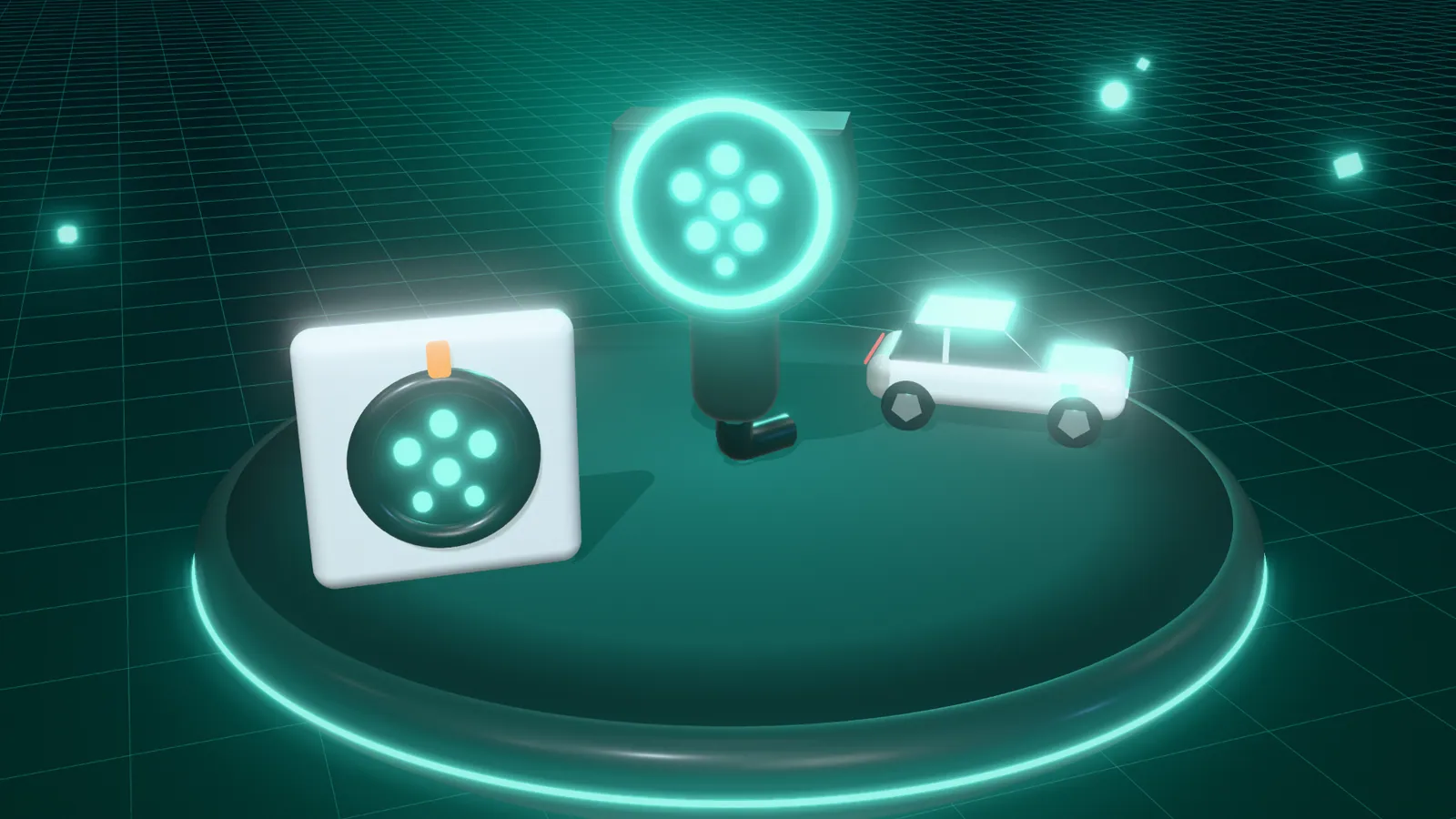
What is CHAdeMO and Is It Still Relevant in 2025?
Explore the relevance of CHAdeMO in today’s EV landscape and discover its advantages and challenges. Read more to stay informed on charging options!
The technical side of charging, explained without jargon: which connectors your car uses, why the charger and the car each cap the speed, and what features such as OCPP, Plug and Charge and load management actually do.
29 guides
Nothing matched. Try a shorter or broader word, or browse a topic:
The charging explained guides people read most
Explore the relevance of CHAdeMO in today’s EV landscape and discover its advantages and challenges. Read more to stay informed on charging options!
The best OCPP-compatible home chargers for 2026 are the Zaptec Go 2 (best overall), Rolec EVO (best British-built), and NexBlue Point 2 (best value) — all with genuine OCPP 1.6J endpoints.
Discover if all EV chargers are compatible with every electric vehicle and what you need to know for hassle-free charging. Read more to find out!
Newest first
What OCPP is, why it matters for UK EV charger buyers, and which home chargers support genuine OCPP 1.6J for smart tariff and energy system integration.
CCS is the dominant EV rapid-charging standard in the UK. This guide explains how it works, what speeds to expect, and how it differs from Type 2 and CHAdeMO.
The best EVs with Plug and Charge in the UK are the BMW i5, Porsche Taycan, and Kia EV9. All support ISO 15118-2 over CCS and work with IONITY's UK network today. Tesla is notably absent.
Yes, sometimes. But more often it is the car that limits the charger, not the other way round. Your actual charging rate is always the lowest of three stacked limits: mains supply, wallbox, and your car's onboard charger.
Tesla Model 3, BMW i4, Ioniq 5, Kia EV6, and VW ID family all accept 11 kW AC. The catch: 11 kW requires three-phase supply, which most UK homes don't have.
Very few mainstream EVs accept full 22 kW AC input. The Renault Zoe R135 (Q-OBC), BYD Atto 3, and Smart ForTwo ED are the main examples. Most popular EVs cap at 11 kW on three-phase.
Most modern EVs can schedule when charging begins using their touchscreen or app. This guide covers which cars offer native scheduling and how it works in practice.
On a standard UK home supply, your charging speed is capped at 7.4 kW. Three variables determine whether you reach that ceiling: your mains supply, your charger, and your car's onboard charger.
OCPP is the open standard that lets your home EV charger talk to any back-end management system, preventing vendor lock-in and enabling smart tariff integration and dynamic load management.
OCPP lets your energy supplier schedule your home EV charger automatically. This guide explains how Intelligent Octopus Go, E.ON Next Drive, and OVO Charge Anytime use OCPP to control your charger.
For most UK homes in 2026, Plug and Charge is not essential for home charging. It becomes worth the premium for V2G adopters, multi-driver households, and frequent IONITY users.
Plug and Charge lets you start a charging session just by plugging in. ISO 15118 is the standard that makes it possible. In 2026, IONITY and Octopus Electroverse offer the broadest UK coverage.
Powerverse Raya is an AI scheduling platform that automatically decides when to charge your EV and battery using tariff forecasts, weather data, and household patterns. It natively supports the Hypervolt Home 3 Pro.
Discover the future of EV charging by 2035. Explore emerging trends, potential challenges, and how they will reshape our charging infrastructure. Read more!
Explore CCS charging technology, its benefits, and how it works for electric vehicle users. Get informed and optimize your charging experience today!
Discover the different types of EV chargers and their charging levels. Simplify your choices and find the right fit for your electric vehicle. Read more!
Explore how solid state batteries can enhance EV charging efficiency and safety, making electric vehicles more accessible. Read the article to learn more.
Discover how AI enhances efficiency and access in smart EV charging, optimizing energy use and supporting sustainable transportation. Read the article now!

Discover essential insights on the UK's smart charging regulations for EV owners. Stay informed and navigate the changes effectively. Read more now!
Discover how Dynamic Load Management optimizes EV charger efficiency and energy use. Learn to enhance your charging strategy—read the full guide now.
Discover the importance of load balancing in EV charging and how it optimizes energy distribution for a sustainable future. Read more to learn how it works.
Discover how Plug Charge Technology enhances electric vehicle efficiency and convenience. Learn its benefits and impact on the EV landscape. Read more!
Discover smart scheduling for EV charging and learn how it optimizes costs, enhances efficiency, and fits your lifestyle. Read the article to find out more!
What are Rapid DC chargers and why do businesses install them? A practical guide to commercial EV charging for UK sites, fleets, and car parks.
A complete guide to EV connector types and charging speeds in the UK, from slow 3kW home charging to 350kW ultra-rapid public chargers.
Discover what affects EV charging speed, including battery capacity, charger output, temperature, and state of charge. Optimise your home charging setup.