
On this page
This review covers the Ohme Home Pro charger, a smart, tethered charger built for UK drivers seeking lower running costs and straightforward day-to-day charging. The Ohme Home Pro charger is rated at 7.4kW/32A and is designed for wall mounting, making it ideal for home installation and compatible with a wide range of electric cars. The Ohme charger is best known for tariff-led charging, app control, and a clear focus on off-peak energy use.
If you are choosing among home EV chargers in the UK, this model makes most sense when you want your charging to follow your tariff automatically and you value ease of use over flashy design. The Ohme charger is compatible with a wide range of electric cars and is built around smart energy management. It can suit both electric vehicle and plug-in hybrid drivers, especially if you charge at home most days and want a charger that works with your energy plan rather than against it.
For many buyers, the key question is not whether the charger can deliver power. It is whether the charger fits your cable preference, your home setup, and the way you actually use your car. The Ohme charger is designed around integration with energy tariffs and smart charging features for electric cars. That is where the Ohme Home Pro stands out, and where it can also be less suitable than a simpler home charger or a more design-led option.
What The Charger Offers at a Glance
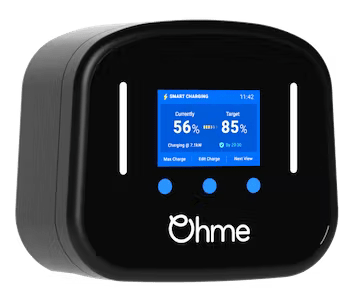
The Ohme Home Pro is a smart charger featuring a built-in LCD screen. The Home Pro’s LCD screen is user-friendly and simplifies setup and operation, especially for less tech-savvy users. This built-in interactive LCD screen allows users to control charging and view live data directly, without needing to use the app, which is a level of convenience some other chargers that rely solely on app control do not offer.
Most UK homes will use it as a 7.4kW single-phase home charger, which is the standard choice for overnight charging. The combination of the interactive LCD screen and the Ohme charger app gives users comprehensive access to charging data and controls, with the charger app providing real-time data and cost tracking. Additionally, the Home Pro features LED status indicators that offer immediate visual feedback on the charger’s operation, making it suitable for most driveways and garages, as long as your supply and installer check out.
Power Output, Cable Type, and Everyday Suitability
The Ohme Home Pro is a tethered unit, featuring a permanently attached Type 2 charging cable available in either a 5m or 8m length. This design offers convenience and ensures you always have a charging cable ready, while the choice of cable length allows customers to select the best fit for their parking setup, with the 8m option providing extra reach for more challenging or varied parking arrangements. In contrast, untethered options let users supply their own cable, giving greater flexibility in cable length and type.
Untethered chargers allow you to use your own cable, which can be especially useful if you want a specific cable length or need to replace the cable in the future. This flexibility is ideal for those who may change vehicles or have unique parking needs.
The Ohme Home Pro is part of a range that includes both tethered and untethered options, catering to different user preferences and installation requirements.
Ultimately, the choice between tethered and untethered affects the type of charging cable used and the convenience for daily charging, so consider your needs before deciding.
Built-In LCD Screen, Controls, and Connectivity
The built-in LCD screen gives you charge status at the wall, which is useful when you want a quick check without opening the app. The charger features physical charger buttons for direct operation, allowing you to control charging both from the charger itself and from your phone.
Unlike some chargers that rely solely on wi fi connectivity, the Ohme Home Pro uses a built-in 3G/4G SIM card for its smart features, with the data cost covered by Ohme for the first three years. Wi-Fi connectivity is also available, and the charger can receive your Wi-Fi details via Bluetooth during setup, which is useful if the mobile signal is weak at the installation site.
Unlike app-only rivals, the Ohme Home Pro can be operated from the unit itself. The screen covers basic checks and controls, while the app handles scheduling and cost tracking.
Tethered Design Versus the Ohme ePod
The Ohme Home Pro and the Ohme ePod suit different habits. The Home Pro is tethered and easier for fast daily plug-in use, while the ePod is untethered and better if you want a cleaner look or more cable flexibility.
If you want convenience above all else, the tethered Type 2 lead makes the Home Pro easier to live with. If you prefer to keep your cable separate, the ePod may fit better.
Smart Features and Tariff-Based Charging
The real value of the Ohme Home Pro comes from its intelligent features, including smart tariff integration and direct API integration with energy suppliers like Octopus Energy. This allows the charger to communicate directly with platforms such as Octopus Intelligent Go, enabling real-time tariff updates and seamless scheduling. The charger communicates directly with Octopus Intelligent Go and other smart tariffs, automatically scheduling charging during the cheapest half-hour slots for optimal cost savings.
With dynamic energy tariff integration, the charger can synchronise charging with the cheapest and greenest electricity rates available. The Ohme app provides advanced tariff integration, allowing users to set a maximum price cap for charging and ensure their vehicle only charges when electricity prices are at their lowest. Access to these features, especially when using Intelligent Octopus Go, can make each charge cheaper than charging at flat or peak rates, and helps you optimise charging times around your energy plan.
How the Ohme App Manages Schedules and Costs
The Ohme app lets you set start and stop times, target charge levels, and charging preferences for different journeys. That gives you more control than a basic timer and helps you avoid charging when rates are high.
You can also view your charge history in the app, including details of each charging session such as energy usage and cost. Monitoring energy usage during charging sessions helps EV owners understand their charging costs and energy consumption, enabling better management of home energy use. This is useful if you want a clearer view of what your EV is adding to your household bill.
Tariff Integration and Off-Peak Charging
Tariff integration is one of the Home Pro’s strongest points. The Ohme Home Pro allows users to schedule charging during off-peak hours and avoid peak hours, helping them save money on EV charging costs. It is compatible with a wide range of energy tariffs, including Intelligent Octopus Go, which offers discounted off-peak rates. The Ohme Home Pro can reduce charging costs compared to a flat rate tariff by automatically scheduling charging during off-peak periods.
In practice, this means the charger can automatically aim for off-peak charging without you checking the clock every night. If you regularly use an overnight tariff, these features can help you reduce your overall EV charging costs.
Dynamic Charging, Updates, and Energy Monitoring
Dynamic smart charging helps the charger shift or pause charging based on tariff changes and timing targets. The Ohme Home Pro features dynamic load balancing, which uses a CT clamp to monitor household electricity usage in real time. When high-draw appliances are in use, the charger automatically reduces its charging output, helping to prevent the main fuse from tripping. This is more useful than a fixed schedule, especially if your energy plan changes in half-hour blocks.
The Ohme Home Pro is compatible with a wide range of EV tariffs, including Intelligent Octopus Go, and previously supported OVO Charge Anytime before that direct integration ended in July 2025. This compatibility allows users to optimise charging times, taking advantage of off-peak hours to save on electricity costs.
The charger also supports over-the-air updates, so features and improvements can be pushed through without a manual rework. For many homes, that keeps the charger current and easier to manage over time.
Installation, Safety, and Electrical Requirements
Ohme offers a fully managed installation service through its network of certified installers. The Ohme Home Pro is sold with standard installation included, which covers a cable run of up to 15 metres from the consumer unit. If the cable run exceeds 15 metres or the consumer unit needs upgrading, additional charges may apply. The Ohme Home Pro includes a CT clamp in the box, which is essential for dynamic load management during installation, allowing the charger to monitor household electricity usage in real time. Eligible renters and flat owners can receive up to £350 off the installation cost through the OZEV grant, while homeowners in houses are no longer eligible for this grant as of March 2022.
The unit is rated IP55, making it suitable for both indoor and outdoor installation. Additionally, the charger is compact, measuring 170mm (H) x 200mm (W) x 100mm (D), so it fits a variety of installation spaces without being obtrusive. A proper site survey should confirm your supply type, cable route, and protection needs before fitting.
UK homes vary a lot, so the installation process is not just a box-ticking exercise. The right setup affects both safety and how well the charger performs day to day.
Single-Phase Homes, Supply Checks, and Charger Placement
Most UK homes are single-phase, which suits the Home Pro well at 7.4kW. Your installer should check the distance to your consumer unit, cable run, and where the charger will sit on your wall.
Charger placement also matters for cable reach and weather exposure. A short, tidy route usually looks better and reduces installation complexity.
PEN Protection, RCD Type A, and Overcurrent Protection
The Ohme Home Pro includes PEN protection, which helps protect against certain earth fault issues and can remove the need for an earth rod in many installs. That can simplify the job and reduce disruption.
You still need the correct safety hardware, including RCD Type A protection and overcurrent protection where required. A qualified installer should confirm what your property needs before fitting.
CT Clamp, Load Balancing, and Regulation Compliance
A CT clamp measures household electricity use, which helps the charger avoid overloading your supply. When used with load balancing, it can reduce the chance of tripping when other appliances are running.
This also links to UK smart charging regulations 2021, which shape how connected chargers should behave. If you are checking for grant-related or historic support, the old Ozev grant requirements are still useful as a reference point for compliant installation standards.
Running Costs, Tariffs, and Real-World Value
The Ohme Home Pro is strongest when you use it to cut charging costs rather than just charge at full speed, with smart features and a standard installation package included in its price. Charging costs are typically calculated per kWh, and the smart charging features of the Ohme Home Pro help users save money by automatically scheduling charging sessions during off-peak hours or when electricity rates are lowest. The standard maximum home charging rate is 7.4kW, providing about 25-30 miles of range per hour, and the Ohme Home Pro delivers consistent charging speed and power output, handling dynamic load adjustments efficiently.
If you use the Ohme Home Pro with a smart EV tariff like Intelligent Octopus Go, your running costs can be noticeably lower than on a standard tariff, depending on your charging habits and vehicle. The value depends on how often you charge, when you charge, and whether your supplier offers a strong EV tariff.
Ohme sells the Home Pro with standard installation included. With the OZEV chargepoint grant of up to £350, the installed cost can be lower for eligible renters and flat owners.
How Much You Can Save With EV Tariffs
The charger is built for tariff integration, so it works well when your energy plan has cheap overnight windows. That is where most UK drivers see the biggest savings, especially on high-mileage use.
If you charge during off-peak charging hours instead of daytime rates, the difference can be meaningful. For some drivers, the savings are enough to justify the smarter charger on their own.
When Smart Scheduling Makes the Biggest Difference
Smart scheduling helps most if you leave the car parked overnight and do not need a full battery immediately. It is also useful if you run two cars or have irregular weekly mileage.
It matters less if you mostly top up at odd times during the day. In that case, you still get control, yet the cost benefit is smaller.
Warranty, Support, and Long-Term Ownership
Ohme typically backs the charger with a three-year manufacturer warranty, and that is in line with many major home chargers. UK-based support is also a practical point if you want help after install.
Good support matters because home charging is an everyday appliance, not a one-off purchase. A charger that is easy to manage over time usually feels better value than one with more style but less clarity.
Solar Compatibility and Home Energy Fit
The Ohme Home Pro offers solar charging, allowing it to use excess output from a solar PV system for EV charging. Solar charging is available on most Home Pro chargers with a complete setup installed from January 2023 onwards, and it relies on a CT clamp to measure how much surplus power your panels are producing. Two modes are offered: Solar Boost, which uses excess solar power to top up your car during and after scheduled charging, and Solar Only, which charges exclusively from excess solar energy and starts when at least 1.44kW of surplus is available. Charging your EV with solar energy can help reduce your carbon footprint by minimising reliance on grid electricity.
Its fit depends on whether you want to use surplus generation, not just buy cheap electricity from the grid.
What Solar Charging Compatible Really Means
Solar charging compatible means the charger can use available surplus solar generation instead of pulling as much from the grid. In simple terms, it helps you make better use of the electricity your panels produce.
That does not mean every session becomes fully solar powered. It means the charger can react to what your home is producing and adjust charging accordingly.
Using Excess Generation Alongside Smart Charging
When the charger works with a CT clamp and load balancing, it can better judge how much spare power is available. That helps avoid pulling unnecessary grid power when your panels are generating.
This is where smart charging and solar use work well together. You can set a departure time, then let the charger try to use your own energy first.
Who Should Prioritise Solar Compatibility
You should prioritise solar compatibility if you already own solar panels or plan to add them soon. It also makes sense if you care about reducing grid use as much as possible.
If you have no solar plan and only want the cheapest night charging, the feature may be less important than tariff integration and cable convenience.
How It Compares With Other Popular Home Chargers
The Ohme Home Pro sits in a busy part of the market as a popular smart EV charging option for customers and EV drivers. Competing with brands such as Pod Point, the Ohme charger stands out by offering features such as smart scheduling, dynamic load management, and app integration. These capabilities allow users to manage their budget effectively, set a maximum charge cost cap, and ensure their EV is charged when electricity rates are lower.
Its strength is that it combines smart charging with practical tariff use in a way many UK EV drivers can understand and actually use. The design of the Ohme Home Pro is sometimes described as more boxy compared to more streamlined competitors, but it compensates with robust functionality. Dynamic load balancing also helps manage high draw appliances like ovens and dishwashers, preventing electrical overloads during charging.
Ohme Home Pro Versus Hypervolt Home 3 Pro
The Hypervolt Home 3 Pro is often chosen for its compact design, strong app experience, and premium look. The Ohme Home Pro feels more focused on tariff savings and scheduled charging.
If you want a cleaner wall unit and a polished finish, Hypervolt may appeal more. If you care more about off-peak control and energy costs, the Ohme Home Pro is usually the more direct choice.
How It Stacks Up Against Solar-Focused Alternatives
Against solar-focused chargers such as the MyEnergi Zappi, the Ohme Home Pro is less specialised for pure solar use. Zappi is stronger when solar self-consumption is your main goal.
The Ohme Home Pro still makes sense if you want solar compatibility plus tariff-led charging in one unit. That makes it a more balanced option for homes where solar is only part of the plan.
Who It Best Suits in the UK Market
You should shortlist the Ohme Home Pro if you want a smart home charger that is easy to use, good with tariffs, and simple for overnight charging. It suits UK drivers who plug in regularly and want to cut costs without a complicated setup.
It is less compelling if you want a detachable cable, a minimal design, or a charger built mainly around solar export matching.
FAQs
Is this home EV charger a good option for UK drivers?
Yes, it is a strong option if you charge at home and want to use smart tariffs to lower costs. It fits the UK market well because it works with common single-phase home installs and supports overnight charging habits.
What is the difference between the Home model and the Pro model?
The Home Pro is the tethered version, so it comes with a fixed Type 2 cable attached. If you want quicker plug-in use each day, that usually makes it the easier choice.
Should I choose a tethered or untethered unit for my driveway?
Choose tethered if you want simple, fast charging with less hassle each time you plug in. Choose untethered if you prefer to store your cable separately or want more flexibility if you change vehicles later.
How much does installation typically cost in the UK, and what affects the price?
Installation costs vary with cable length, supply distance, consumer unit work, and whether extra protection is needed. A straightforward install is usually cheaper than one that needs long cable runs or upgrades to the electrical setup.
How long does it take to charge an electric car using this charger?
At 7.4kW, it can fully charge many EVs overnight, depending on battery size. Smaller batteries and plug-in hybrids may take much less time, while larger EV batteries can need a full night.
How can you prevent someone from unplugging your EV while it is charging?
A tethered charger already helps because the cable stays attached to the unit. Some cars also lock the connector while charging, so the plug cannot be removed until you stop the session or unlock the vehicle.