
On this page
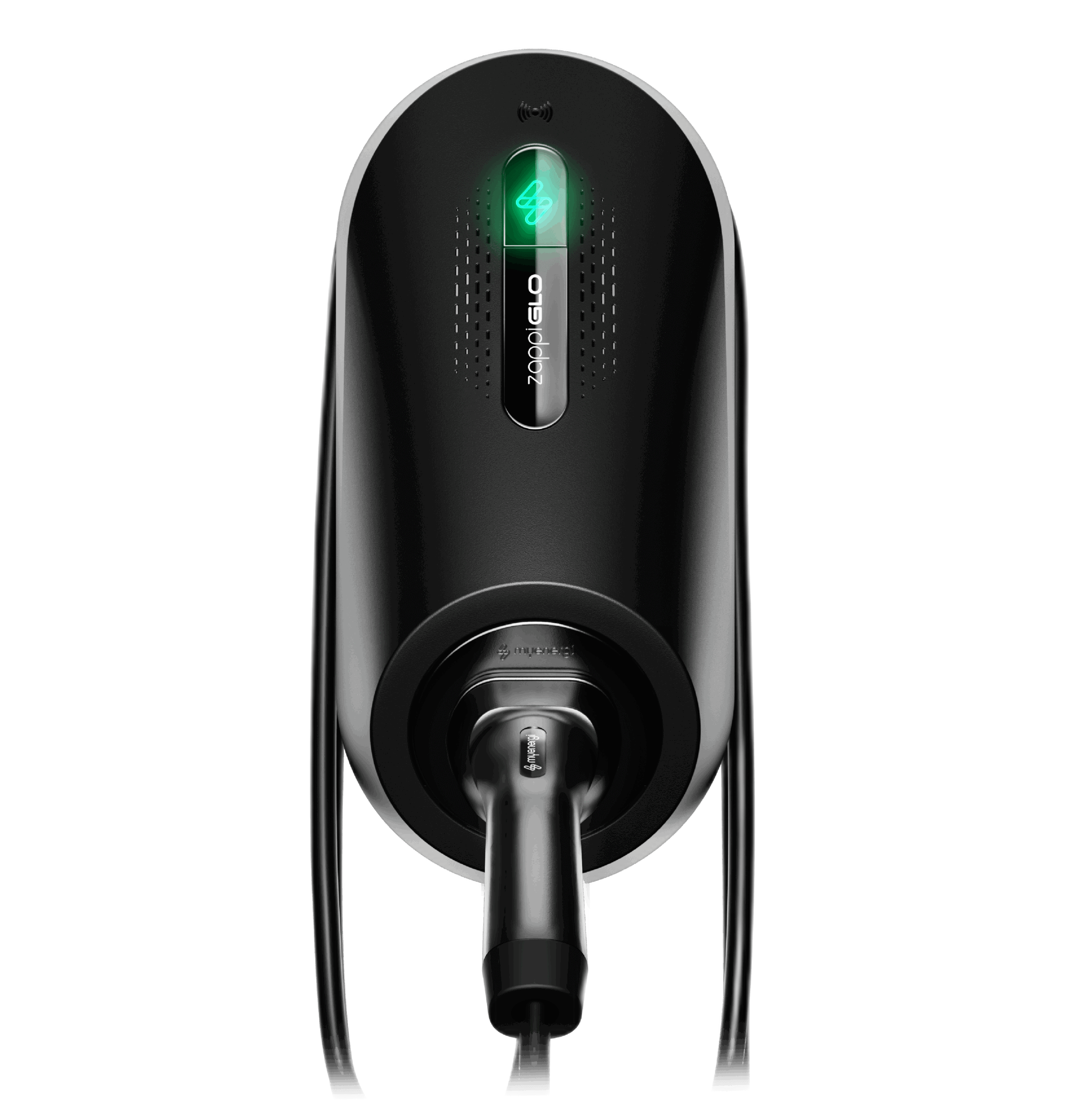
The Zappi GLO is part of the new GLO series within the myenergi product family, standing out as one of the trendiest members thanks to its sleek, compact, and playful design. With modern aesthetics and a digital approach, it delivers a visually appealing, screen-free wall unit while keeping core Zappi features like solar compatibility, tariff control, and RFID access, all managed through the myenergi app.
The GLO series is designed for customers who value user-friendly, modern, and visually appealing smart charging solutions. If you’re after a charger that fits a modern driveway, works with solar PV, and can handle off-peak tariffs, the Zappi GLO is definitely worth a look.
What The Charger Offers at a Glance
The Zappi GLO EV charger is the latest addition to the myenergi lineup, designed for those seeking a sleek, modern, and user-friendly charging solution. The Zappi GLO is a wall-mounted 7kW smart home EV charger, featuring a 6.5-metre tethered Type 2 cable, and its key features include a minimalist, screenless interface with all settings managed via the myenergi app, eliminating traditional screens for a fully digital, app-based experience.
GLO features include a compact, stylish design and intuitive app-based control, making it easy to configure and monitor your charging. The IP65-rated construction is designed for permanent outdoor use, making it suitable for both indoor and outdoor installation. You still get the core benefits: solar compatibility, tariff-aware charging, and a clutter-free, contemporary look.
It sits towards the premium end of the market rather than the budget tier. You get a 7kW single-phase charger for UK homes, supplied with a 6.5m tethered Type 2 cable. The Zappi Glo entered the market as a modern, minimalistic alternative to the original Zappi charger, offering a slimmer and smaller design.
Who It Suits Best
Zappi GLO is pretty much made for you if you already have solar, plan to add it, or want to take advantage of cheaper night rates. With support for multiple users through secure access control using RFID cards and fobs for up to 126 users, it’s a simple way to charge for busy households. The Zappi GLO is compatible with all major electric car models, making it a versatile choice for any EV owner. If you’d rather use your phone as the control panel and skip having another screen on the wall, it makes sense.
Busy households who want daily charging without fiddling with on-unit controls will probably appreciate the GLO. If you care about a neat look and don’t want to dig through menus on the charger itself, this is the vibe.
Key Specs and Core Features
So, what’s in the box? You get:
-
7kW single-phase charging
-
Smart charging via the myenergi app
-
Tap-to-Charge Access Key (RFID) for secure, convenient access
-
RFID card or fob access supporting up to 126 users, ideal for both home and commercial use
-
Card-based security system eliminates the need for PIN codes
-
Solar and home energy integration
-
Tethered 6.5m Type 2 cable
-
Minimalist, screen-free front (note: the Zappi GLO does not have an LCD display; all controls and information are accessed via the app for a streamlined user experience)
-
Dynamic load balancing automatically manages and distributes electrical load, preventing overloads and optimising charging efficiency for home safety.
-
Advanced firmware updates are delivered automatically, ensuring your charger stays up to date with the latest features and performance improvements.
-
Built for UK homes
How It Differs From the Standard Zappi
The biggest difference is the interface. The original Zappi and Zappi 2.1 are all about on-device control and lots of features up front, while the GLO is fully embracing a digital approach by removing the physical screen and shifting all controls to the app.
That change gives it a cleaner look. If you want direct control on the charger, the older model is probably better, but if you’re happy with app-based control, the GLO feels more modern, fully embracing seamless integration with digital technologies and a user-centric design.
Smart Charging, Solar Modes, and Tariff Features
Zappi GLO uses smart tech to provide a way to charge smart, integrating with dynamic energy tariffs so charging can be lined up with cheaper rate windows. Its dynamic energy management adjusts power based on grid import/export and works with your chosen energy tariffs, helping you make use of lower and greener rates. By optimising charging times and integrating with smart tariffs, the charger helps reduce grid demand and running costs.
Matching your charging to your home’s energy setup is where this charger really shines. The Zappi GLO works with home renewable generation such as solar panels, enabling you to maximise green energy usage and save on energy costs. If your electricity costs bounce around, this flexibility is a big plus.
Ecosystem integration with myenergi products like the eddi hot water diverter and libbi battery storage allows for comprehensive home energy management.
How Smart Mode Charging Works
Unlike the standard Zappi, the GLO does not use the Fast, Eco, and Eco+ modes. myenergi has replaced them with a single Smart Mode, which is switched on by default and follows a built-in schedule (Monday to Friday, midnight to 8am) designed to line up with most low-cost night tariffs.
In Smart Mode the GLO can follow your schedules, respond to dynamic tariffs, and use surplus solar energy when available. Turn Smart Mode off and the charger simply delivers full power until your car is charged, while still prioritising solar if it’s available.
Using Surplus Solar at Home
Instead of sending extra solar back to the grid, the Zappi GLO can direct it straight into your car, working seamlessly with solar panels, solar battery integration, and battery integration for optimised energy usage. The charger can operate with or without solar panels, using grid-only power if needed, and can dynamically adjust charging based on grid import/export to maximise efficiency.
If you already have PV panels, this just makes sense. Plus, users have full control over energy management through integration with smart heating systems and solar technology.
It works best if your home generates steady power during the day and your car’s parked up for a while. If your solar output is all over the place, you’ll want to tweak the app settings to get the most out of it.
Off-Peak Scheduling and EV Tariff Compatibility
The GLO is built for smart tariff scheduling, supporting automatic charge schedules so you can set and automate charging times for convenience and cost savings. It’s designed to work with popular off-peak electric car tariffs, allowing you to benefit from cheaper rates during off-peak hours. With dynamic EV tariff integration, the Zappi GLO can automatically schedule charging during the cheapest and greenest off-peak hours. It works with off-peak plans such as Octopus Go and Intelligent Octopus Go, and is set up to take advantage of low-cost night rates, well suited if you plug in overnight.
If you’re already timing your charging for cheaper electricity, the GLO fits right into that routine. Lower running costs without changing your habits? Yes, please.
Design, App Control, and Everyday Use
The Zappi GLO is all about simplicity, featuring a sleek, playful design with modern aesthetics. Its minimalist, screenless interface and compact form factor blend seamlessly into any space, making it a stylish addition to your home or driveway.
That’s great if you want fewer buttons and more control from your phone. It also keeps your wall looking tidy, always a plus if your charger is on show. The casing carries an IP65 weatherproof rating with robust impact resistance and tamper detection, so it’s suited to both indoor and outdoor installations.
Screen-Free Operation Through the myenergi App
The myenergi Zappi GLO features a screenless interface, with all settings managed via the myenergi app. The Zappi app is an advanced, user-friendly tool for managing electric vehicle charging and home energy systems, offering seamless integration with other smart home devices and providing remote control, scheduling, locking, and monitoring features to enhance your experience. Monitoring and management are handled entirely through your smartphone, allowing you to start or stop charging, switch modes, check usage, and track performance, all from your phone.
Day-to-day, it’s easy once you get the hang of it. You do lose the instant feedback of an on-unit screen, so you’ll need to be okay with checking your phone for updates.
RFID Access and Household Convenience
RFID access is surprisingly handy. With the Zappi GLO’s Tap-to-Charge Access Key, you simply tap your RFID card for secure and convenient access control, no need to enter a PIN. If multiple people use the charger, RFID cards or fobs make it simple and secure, allowing each user to tap to charge without sharing app logins.
The card-based system eliminates the need for remembering PIN codes, enhancing both security and user convenience. If your charger’s on a shared driveway or you just want quick authorisation, this little feature makes life easier. It’s one of those things you don’t think about until you use it.
Cable, Form Factor, and Installation Positioning
The compact design helps the charger blend in. The 6.5m tethered cable means it’s ready to go whenever you park up, just check the reach suits your parking spot.
You’ll still want to think about where it goes, cable reach, parking angle, and space for the installer all matter. Don’t leave it to chance.
Installation, Compatibility, and Running Requirements
Getting an EV charger installed isn’t just about the box, it depends on your home’s supply, parking, and electrics. The Zappi Glo is compatible with all EVs that use a Type 2 charging connector, which is the standard in the UK. Zappi GLO is built for standard UK homes, and can be installed quickly using the new Installer Assistant app. Notably, the Zappi Glo does not require an earth rod for installation, as it features in-built protection, simplifying the process for qualified electricians. Installation should always be performed by a qualified electrician to ensure safety and compliance with regulations, and homeowners should assess their home’s electrical capacity and discuss any potential upgrades with their electrician before installation. This step-by-step digital tool guides installers through connecting the power cable and grid CT, securing the cover, and configuring customer settings and grid parameters, ensuring proper commissioning. The GLO also includes 6mA DC protection for electrical safety, meeting the latest standards and regulations.
If you already have myenergi gear like Eddi, the GLO fits right in with a bigger home energy setup. That’s a bonus if you want solar charging and home coordination all in one.
What to Expect From EV Charger Installation
Most installs are a straightforward wall mount, with the installer checking how the cable will run from your supply to the charger. The Installer Assistant app streamlines the installation process for installers, providing step-by-step guidance to ensure quick and accurate setup. Expect a survey first, final quotes depend on cable distance and any awkward routing.
If your supply point is far from where you park, extra labour can bump up the cost. Detached garage? Long driveway? Get a clear breakdown before anything starts.
Electrical Setup, Safety, and Load Management
The GLO is made to be safe in a domestic setup, with protections handled by the installer, and includes 6mA DC residual current protection and PEN fault detection for enhanced electrical safety. The Zappi Glo also features load balancing and dynamic load balancing, which manage electrical loads and prevent overloads by optimising charging efficiency. Load management is important if your house doesn’t have much spare capacity, charging has to stay within safe limits.
If you’re already using home energy management tools or kit like Eddi, the GLO can plug into that system. That’s helpful if you want solar, battery storage, and EV charging to all work together without tripping your supply.
Vehicle, Solar, and Home Energy Compatibility
It works with any EV that supports Type 2 charging, so you’re covered for most UK cars. The Zappi Glo integrates seamlessly with other myenergi products, creating a unified home energy ecosystem that can be managed remotely. You don’t need solar, but if you do have it, make sure your inverter, CT clamps, and home energy setup are ready for monitoring. The Zappi Glo can connect to solar PV systems, enabling you to use surplus solar energy for EV charging and significantly reducing home charging costs. The Zappi GLO also supports battery integration and solar battery integration, allowing seamless coordination with solar panels and home battery storage for optimised energy management and greater efficiency.
A good installer will help match the charger to your car, roof, and energy goals.
Price, Running Costs, and Value for Money
myenergi does not publish a fixed list price for the Zappi GLO; you buy it through installers and retailers, and quotes vary. It sits above entry-level chargers, and the real cost is in the installation, labour, cable length, and electrical work can add a fair bit.
If you use the tariff integration and solar features, it can pay for itself over time. If you just want basic charging, you might not need all the extras.
Upfront Cost Versus Installed Cost
Don’t just look at the hardware price. Installation is quoted separately and varies with your home’s wiring and cable run, and tricky setups cost more.
Always compare the full installed quote, not just the box. That’s the only way to see the real value.
Potential Savings With Solar and Off-Peak Tariffs
Using tariffs like Octopus Intelligent Go, Go, or Charge Anytime, the GLO can help you charge during cheaper periods. Add solar, and you could cut down your grid usage even more.
Savings depend on how often you charge and your energy habits. If you can line up your sessions with low-cost or surplus power, the case for the GLO is much stronger.
When It Represents Good Value
It’s good value if you want smart charging, app control, and solar support in one unit. If you already have PV or plan to use tariffs seriously, it’s a smart buy.
For occasional overnight charging with no solar, a cheaper charger might do the job. But if you’re thinking long-term and want an advanced setup, the spend is easier to justify.
How It Compares With Other Popular Home Chargers
The Zappi GLO has plenty of competition in the UK. Some chargers focus more on tariffs, some are all about simplicity, and some are just easier to live with.
GLO is strongest for smart, solar-ready charging. If your habits revolve around solar or tariffs, it’s right in the sweet spot.
Against Ohme Home Pro for Tariff-First Charging
Ohme Home Pro is probably the pick if you only care about tariff automation. It’s built to chase cheap overnight rates.
Zappi GLO wins out if solar charging is a bigger deal for you. If you use both solar and tariffs, it comes down to what matters most day-to-day.
Against Tesla Wall Connector for Simplicity and Price
Tesla Wall Connector is all about simplicity and suits Tesla owners who want a neat, no-fuss setup.
Zappi GLO gives you more brains, solar and tariff smarts. If you don’t need those, the Tesla charger may be the simpler choice, but if you want energy-aware charging, GLO is the way to go.
Against Hypervolt and Other Smart Home EV Chargers
Hypervolt is another premium charger with smart features and a slick design. It’s tempting if looks and app experience are your thing.
Zappi GLO stands out with its sleek design, app-only digital interface, and quick commissioning via the Installer Assistant. Its smart tech enables dynamic energy management, integration with home energy solutions, and tariff-aware charging for cost savings. If you want smart charging and home energy integration in one ecosystem, the GLO is built around exactly that.
FAQs
What's the difference between the standard model and the newer GLO version?
The GLO ditches the screen and moves everything into the myenergi app and RFID access. The standard model gives you more on-device interaction. If you want a cleaner wall and don't mind using your phone, GLO's a good fit. Prefer seeing info on the charger itself? Stick with the standard one.
Is the unit considered good value and reliable for everyday home charging?
If you're planning to use solar or tariff scheduling, it's solid value. If you just need basic charging, you might find it a bit pricey for your needs. For daily use, the hardware's built for regular home charging and should be reliable with proper installation. Your experience will depend a lot on how well it's installed and how it's set up for your home. Installation cost comes on top of the charger and varies by installer and property. Longer cable runs, distance from your consumer unit, or tricky walls all add up. Get a written quote that covers labour, materials, and extras. It makes comparing installers so much easier.
How do you set it to prioritise grid power and avoid charging solely from a home battery?
You'll tweak the charging mode in the app, setting the mix you want. If you have battery storage, your installer should help set it up so the charger doesn't pull from the battery unless you want it to. Worth checking at handover, especially if you have solar and energy management gear. Saves a ton of hassle later.
What's the process for fitting and configuring CT clamps for solar or battery monitoring?
CT clamps are installed by your electrician around the right cables so the charger can measure import, export, or solar output. Placement is key, the charger relies on that data to decide when to use surplus power. If clamps go in the wrong spot, solar matching won't work right. Always ask your installer to explain what each clamp is monitoring before they leave.
How does Bluetooth setup and connectivity work, and what should you do if pairing fails?
Bluetooth comes into play mostly during the initial setup. It helps pair your charger with the app before switching over to your regular home connection. After that, you're really just using the app and your home Wi-Fi for daily control. Bluetooth isn't needed day-to-day. If pairing doesn't work, first make sure the charger's actually got power. Double-check that your phone's Bluetooth is switched on, and that the app's got all the permissions it needs. Still stuck? Try giving everything a quick reset and start the pairing process again. That usually sorts it out. If not, your installer should be able to help, sometimes the device just wasn't commissioned right in the first place.