
On this page
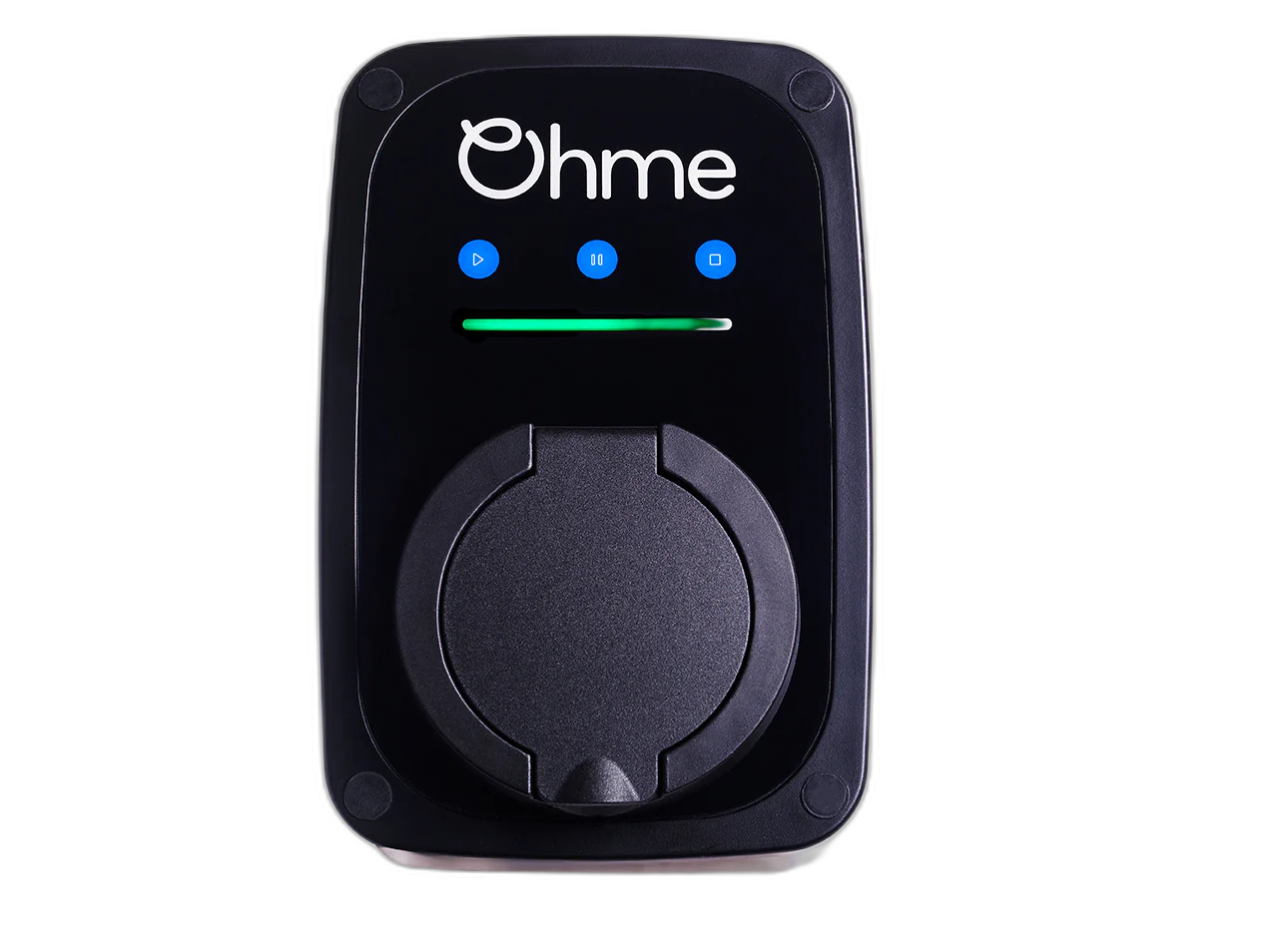
This Ohme ePod review provides a detailed assessment of the Ohme ePod charger, focusing on its features, usability, pricing, and overall value. In this ohme epod review, we’ll explore why the ePod is a competitively priced, smart, and versatile home charging solution suitable for all electric vehicles. The Ohme ePod is roughly the size of a hardback book, measuring just 230mm x 140mm x 100mm and weighing only 1.48kg, making it one of the smaller smart chargers on the market. Its discreet, lightweight build saves space while delivering advanced charging features.
The enclosure of the Ohme ePod is made from fire-rated PC945(GG) polycarbonate, providing a solid feel while keeping the unit lightweight. The design is sleek and unobtrusive, resembling a small intercom unit rather than a traditional EV charger, which enhances its aesthetic appeal when mounted on a wall.
The ePod is fully compliant with the latest Smart Charge Point Regulations, ensuring it meets all current safety and industry standards for reliable and lawful operation.
The Ohme ePod is compatible with all plug-in electric vehicles, including popular models like Tesla and Nissan, providing seamless charging for a wide range of electric vehicle owners.
If you want a smart charger that works well with time-of-use tariffs and gives you a neat, socketed setup, the Ohme ePod is a strong option to compare against tethered rivals. If you already know you want a built-in cable, though, you will likely be better served by a different model.
For many UK homes, the real question is not just charging speed. It is whether the hardware, app, and installation all line up with your tariff, your supply, and the way you use your car day to day.
Key Takeaways:
-
The ePod is one of the smallest EV chargers in the UK, with a compact and lightweight design.
-
Key features include compact size, smart tariff integration, solar compatibility, app control, and built-in safety features.
Verdict at a Glance
The Ohme ePod charger is a smart, app-controlled EV charging device compatible with various electric vehicles, offering advanced features such as scheduling, energy tariff integration, and remote control. It comes with a 3-year manufacturer warranty, providing peace of mind for buyers. It is a compact, untethered charger aimed at UK drivers who want low running costs and efficient charging management, especially if you use a time-of-use tariff and want your charger to handle scheduling for you. The ePod also complies with the UK Smart Charge Points Regulations.
Who It Suits Best
You will get the most value from the Ohme ePod if you have a Type 2 EV, want to use your own cable, and care about smart charging around cheap electricity windows. The charging speed and features of the Ohme ePod are well-suited to the daily needs of most EV drivers, offering convenience and efficiency for regular use. It also suits you if you want a neat wall-mounted unit without a tethered lead hanging in view.
It makes sense for households that may share charging between cars, or for drivers who prefer a cleaner driveway when the charger is not in use. If you want on-unit controls and an attached cable, the Ohme Home Pro is the more convenient fit.
Flat owners and renters can also benefit from the Ohme ePod’s eligibility for the OZEV grant, which provides up to £350 off installation costs for qualifying properties.
Main Strengths and Trade-Offs
Its main strengths are tariff integration, a compact footprint measuring just 230mm x 140mm for discreet wall mounting, and support for smart charging automation. The trade-offs are straightforward: you need your own cable, the app does most of the work, and it gives you fewer on-box controls than some rivals.
Unlike competitors that feature a built in lcd screen for live charging data and enhanced convenience, the ePod does not have a screen. Instead, it uses LED status indicators and three responsive buttons on the unit, allowing users to start, pause, or stop charging sessions directly without needing the app. For detailed monitoring and advanced settings, you’ll still use the smartphone app.
The ePod is also less of a visual statement than a premium design-led unit like the Easee One. That is useful if you want the charger to blend into the wall rather than stand out.
How It Compares With Other Home Charging Options
Against the Ohme Home Pro, the Ohme EV charger ePod offers more flexibility with its untethered design but less built-in convenience compared to the fixed cable option. When compared to the Easee One, both chargers offer app control and smart charging features, so the two are often shortlisted together. The choice often depends on whether you prefer socketed flexibility or a more integrated look. Notably, the Ohme ePod integrates directly with various energy tariffs, such as Octopus Intelligent Go and Agile, enabling automatic scheduling to charge your EV during the cheapest electricity rate periods. It is also fully compliant with the latest regulations, ensuring EV drivers have peace of mind regarding safety and legal standards.
For you, the decision usually comes down to this: do you want a charger that supports low-cost charging with minimal fuss, or do you want a fixed cable that is quicker to use each day? The ePod is the stronger fit for the first group of EV drivers.
Design, Socket Type and Day-to-Day Use
The ePod is built around simplicity, which is why the physical design matters. With a compact footprint measuring just 230mm x 140mm, the ePod is ideal for discreet wall mounting and easy installation. The unit features a universal socket compatible with both Type 1 and Type 2 connectors, enhancing flexibility for different EV models. You get an untethered unit with a socket rather than a fixed lead, so the charging cable becomes part of your own kit.
The ePod offers solar compatibility, allowing integration with solar PV systems to enable charging from surplus solar energy. Its enclosure is made from fire-rated PC945(GG) polycarbonate, providing a solid feel while maintaining a lightweight design. The ePod has an IP54 rating, making it suitable for most outdoor positions, although this is a step below some competitors like the Home Pro and Hypervolt, which offer higher IP ratings. For installation flexibility, the ePod can be fitted with cable entry points at either the rear or underside, making it easier to route the supply cable as needed.
Untethered Layout and Type 2 Socket Flexibility
The Ohme ePod uses an untethered universal socket, accommodating both Type 1 and Type 2 connectors for broad compatibility with various EV models. This universal socket allows users to plug in their own Type 2 charging cable or use a Type 1 cable via adapter, making the ePod flexible and suitable for most modern electric vehicles on the market. That keeps the charger smaller and tidier on the wall, and it helps if you may change cars in future.
In day-to-day use, this means you must keep the cable in the boot or garage. If you are used to a tethered unit, that extra step is noticeable, especially in bad weather.
Cable Requirements and Type 2 Charging Cable Costs
You need a compatible Type 2 charging cable, which is usually sold separately. That adds to your initial spend if you do not already own one.
A decent Type 2 cable can be a meaningful extra cost, so it should be counted in your total budget rather than treated as an afterthought. For you, the ePod makes most sense if flexibility is worth that extra outlay.
Weather Resistance, Size and Installation Positioning
The ePod is rated IP54, which means it is suitable for outdoor home use when installed properly. In practical terms, that is fine for most driveways and car ports, as long as the installer positions it sensibly.
Its compact shape helps on narrow walls and tight spaces. If your parking space is awkward, ask the installer to think about cable reach, mounting height, and where you will store the loose lead.
Smart Features, App Control and Charging Automation
The Ohme ePod is strongest when you let the software do the work. It offers advanced charging intelligence, including smart charging sessions that can be managed via the Ohme app or physical buttons. These smart features include dynamic charging capabilities and Ohme’s smart tech, which optimise energy use and help users save money. The ePod can automatically connect to energy tariffs, fetching rates directly through the Ohme app and operating during the cheapest times to reduce electricity bills. The Ohme app allows users to manage charging sessions, view real-time data, and receive updates on charging costs and session history, enhancing the overall user experience. Its app and scheduling tools are aimed at making home charging cheaper and easier, especially if you use an energy plan with off-peak prices.
How the Ohme App Handles Scheduling
The Ohme app lets you start, stop, and schedule charging sessions from your phone. You can easily initiate a smart charging session or trigger instant charging by holding a button for three seconds, enabling rapid power delivery when needed. For API-compatible vehicles, the app can automatically set a target battery percentage, allowing you to specify exactly how full you want your battery to be at the end of a session. You can set a regular routine or a one-off target for a departure time, which is useful when your week is not predictable.
The app-led approach suits you if you do not mind using your phone rather than physical buttons on the charger. It keeps the unit simple, and it makes the charger feel more like a smart home device than a basic power box.
Tariff-Aware Charging and Ready-By Targets
Integrating the Ohme ePod with your electricity tariff allows you to schedule charging during off-peak hours, significantly reducing costs. The ePod features smart tariff integration, enabling automated charging during the cheapest electricity rate periods by natively supporting smart tariffs from providers like Octopus. This means you can set a maximum price cap so charging only occurs when electricity prices are at their lowest, which can reduce running costs for users on time-of-use or EV-specific tariffs.
Tariff integration is one of the ePod’s key selling points. Once your tariff details are set up, it can schedule charging for cheaper hours and work towards a ready-by target before you leave. For most drivers, automated off-peak charging matters more day to day than outright charging speed.
That is especially relevant if you use off-peak charging on a fixed or time-based plan. In practice, it can remove a lot of manual checking and reduce the risk of charging at the wrong time.
Energy Monitoring, Remote Control and 4G Connectivity
The app helps you monitor energy usage and charging costs, which is useful if you want to keep a close eye on home electricity spend. You can see how much energy you have used and make better choices about when to charge.
The Ohme ePod is equipped with a built-in 3G/4G multinet SIM card, providing mobile connectivity for remote control and reliable operation, especially in areas with unstable Wi-Fi. The charger is managed through Ohme’s servers, which are essential for real-time scheduling, firmware updates, and data communication. Ohme covers the SIM cost for the first three years from installation. If the ePod cannot establish a data connection when a vehicle is plugged in, it defaults to basic charging mode, charging at the set amperage without scheduling sessions or tariff optimisation. OTA updates enhance the ePod’s software features, ensuring compliance with evolving regulatory standards and new vehicle integrations.
Solar Boost and Basic Solar Charging Support
If you have a solar PV system, the Ohme ePod offers solar charging through its Solar Boost and Solar Only modes, which rely on a CT clamp to measure the surplus power your panels are producing. Solar Boost uses excess solar power to top up your car during and after scheduled charging, while Solar Only charges exclusively from excess solar energy and starts when at least 1.44kW of surplus is available. Solar charging is available for Ohme ePods with a complete setup installed from January 2023 onwards, making it a practical way to harness excess solar generation to power your car.
For you, this is most useful if your car is parked at home during sunny hours. It is a useful extra rather than the main reason to buy the charger.
Charging Speed, Tariff Compatibility and Running Costs
The ePod is built for standard UK home charging, delivering a max charge of 7.4kW (32A) on a single-phase supply; this provides about 25-30 miles of range per hour of charge. Your focus should be real-world use and electricity costs. The Ohme charger stands out by connecting directly with UK energy providers, enabling optimal charging cost management through seamless integration with energy tariffs. Users can easily initiate a smart charging session or set the charger to max charge by holding a button for three seconds, allowing for instant or fastest possible charging when needed.
Real-World 7.4kW Home Charging Performance
The ePod delivers up to 7.4 kW on a single-phase supply, which is the normal home charging rate for many UK properties and is sufficient for the daily needs of most EV drivers. That is fast enough for overnight top-ups and regular daily use.
In practical terms, you can expect a full overnight charge to be realistic for most EV batteries, depending on the car size and how low the battery is when you plug in. If your supply or vehicle limits are lower, the charger will still work at the highest safe rate.
Working With Octopus Intelligent Go and Intelligent Octopus
Octopus Energy offers innovative tariffs like Agile and Intelligent Octopus, which can be integrated with the Ohme ePod for cost-efficient charging. These tariffs are based on the real-time wholesale cost of electricity, and the ePod’s smart tariff integration enables automatic scheduling of charging during the lowest rate periods. The ePod is a strong match for smart tariff users, especially if you are considering Octopus Intelligent Go or Intelligent Octopus. These tariffs reward you for charging in cheaper windows, and the ePod is designed to schedule charging during off-peak hours to maximise savings, which is where the ePod’s automation matters.
Previously, the Ohme ePod also supported OVO Charge Anytime via direct API integration. However, that direct charger integration ended in July 2025, so OVO customers now need a compatible car connected to Charge Anytime to access its cheaper charging rates.
If you want the charger to manage timing for you, this pairing is one of its best use cases.
Using Octopus Agile and Other Energy Tariffs
The Ohme ePod stands out among EV chargers for its ability to integrate with a wide range of electricity tariffs, including smart tariff integration. This feature enables the charger to automatically schedule charging during the cheapest electricity rate periods, maximising cost savings. The ePod can also work well with Octopus Agile and other flexible energy tariffs, provided you are comfortable with changing prices. That makes it useful if you are willing to let the charger follow cheap slots rather than charge at a fixed time every day.
It also supports energy tariff integration more generally, so you are not tied to one provider. For you, the biggest gain comes from matching the charger to the way your tariff bills electricity.
Potential Savings From Off-Peak Charging
If you mainly charge overnight at off-peak rates, your running costs can fall quite sharply compared with daytime charging. By using the Ohme ePod’s smart charging features, you can save money and reduce your carbon footprint by optimising charging times and integrating with renewable energy sources. The exact saving depends on your tariff, mileage, and battery size, so it is worth checking the maths before you buy.
Even a modest shift in charging time can save you a noticeable amount over a year. That is the main financial case for the ePod, not raw charging speed.
Installation, Safety and Compliance Checks
Installation is where many charger purchases succeed or fail. The Ohme ePod is designed for standard installation, which covers a cable run of up to 15 metres from the consumer unit. If the charger needs to be installed further away, or if upgrades or extensions to the consumer unit are necessary, additional costs may apply. The main fuse, a key safety component, can trip if high electrical loads are present, and older properties may have lower amperage supplies that require attention during installation. The ePod features built-in PEN fault protection, eliminating the need for an earth rod and reducing risks associated with hitting buried services, which saves time and enhances safety. The ePod also complies with the latest Smart Charge Point Regulations, ensuring it meets industry standards for safety and performance during installation. However, a proper setup by a competent installer is still essential.
Built-In PEN Protection and Earth Rod Considerations
The ePod includes built-in PEN fault protection, which is important for UK installations. In simple terms, it helps protect against certain supply faults and can remove the need for an earth rod in many homes.
That can make the installation cleaner and cheaper. Even so, your installer still needs to assess the property properly, because not every home supply is the same.
Dynamic Load Balancing, CT Clamp and Home Supply Limits
If your home has limited spare capacity, dynamic load balancing becomes important. A CT clamp can monitor your household demand and help stop the charger overloading your supply.
This matters if you run other high-demand appliances at the same time. For you, the practical benefit is fewer trips, fewer surprises, and a charger that works with your home rather than against it.
Outdoor Suitability, Standards and Installer Approval
The ePod is suitable for outdoor use, but installation must follow BS 7671 and the EV charging code of practice. It is essential to use an approved installer to ensure the Ohme ePod is fitted properly and in full compliance with regulations. An approved installer will check supply adequacy, earthing, and positioning before the job is signed off.
The OZEV chargepoint grant may also matter if you are an eligible renter or flat owner. The key point is simple: a good charger still depends on a good install.
Price, Alternatives and Final Buying Considerations
Your buying decision here should be about total cost, not just the box price. The ePod is attractive, yet the cable, install, and tariff fit all affect whether it is right for you. Ohme sells the ePod with standard installation included, which keeps it competitive against other options. Additionally, the Ohme ePod receives regular free OTA software updates, which often introduce new features and improvements such as Solar Boost, ensuring your charger remains secure, reliable, and up-to-date over time.
Unit Price, Installed Cost and Grant Context
The Ohme ePod is sold with standard installation included. The total can rise depending on cable routing, fuse upgrades, and whether any extra electrical work is needed.
If a grant or scheme applies to your situation, that can reduce the cost, though eligibility changes over time. Always compare the full installed quote, not just the charger headline price.
Ohme ePod vs Ohme Home Pro
The ePod gives you an untethered Type 2 socket, while the Ohme Home Pro features a tethered cable for added convenience, with different cable lengths available to suit various installation needs such as detached garages or longer driveways. Note that with the ePod the charging cable is removable by design, which may be a consideration for users concerned about cable security. If you want a tidier wall unit and cable flexibility, the ePod is the better fit.
If you want speed and convenience each time you plug in, the Home Pro is easier to live with. Your choice depends on whether you value flexibility or everyday simplicity more.
When an Untethered Charger Is the Better Choice
An untethered charger makes sense if more than one EV in your household may use the same charge point, or if you may swap cars later. It also suits you if you want a cleaner look when the charger is not in use.
You should also consider an untethered model if you already own a high-quality cable. That makes the ePod’s flexibility easier to justify, though it is worth thinking about where you will store the cable if your parking space is exposed.
Key Alternatives for UK Buyers
If you want a different balance of features, the Easee One is a common alternative to compare. It is another compact smart charger, so the choice often comes down to app preference, design, and how each unit handles tariff control. The Ohme ePod stands out with key features such as its compact design, intuitive app integration, and advanced tariff control, making it a strong contender among untethered chargers.
You may also want to compare tethered rivals if you charge every day and want less fuss. The best choice is the one that fits your tariff, your driveway, and your charging habit.
FAQs
Is this charger any good for everyday home use?
Yes, the Ohme ePod works well for everyday home charging if you are happy with an untethered setup. It is especially useful if you want smart scheduling and low-cost overnight charging. The ePod allows users to start a smart charging session easily via the app or physical buttons, making it convenient to initiate, pause, or end charging as needed. If you prefer to keep a cable attached to the wall, you will probably find a tethered charger easier to use.
What are the main differences between the Pro and the Home Pro models?
The main difference is that the ePod is untethered, while the Ohme Home Pro features a tethered cable and a built-in LCD screen that provides live charging data and enhances daily convenience. The ePod suits you if you want flexibility and a smaller wall unit. The Home Pro is better if you want a more convenient plug-in routine each day, with the added benefit of an on-unit LCD screen and a standard tethered cable, which is available in different lengths for various installation needs.
How much does it typically cost to buy and have installed in the UK?
Ohme sells the ePod with standard installation included, which covers a cable run of up to 15 metres from the consumer unit. If your consumer unit is farther away, or if upgrades or extensions to the consumer unit or main fuse are needed; such as in older properties with lower amperage supplies; these can increase the total cost. Cable choice, cable length, and any electrical upgrades can change the total. It is best to compare full installed quotes rather than just the hardware price.
Does it need Wi-Fi to work properly, and what happens if the connection drops?
The ePod uses app control and connected services for its smart functions, so a stable connection helps. The ePod supports both Wi-Fi connectivity and mobile connectivity (such as 4G), ensuring reliable operation even if your Wi-Fi signal is weak or unstable. If the connection drops, basic charging can still continue, but you may lose some remote features and live data. If your Wi-Fi is weak near the driveway, mobile connectivity like 4G can be especially useful.
What power ratings are available, such as 7.4 kW and 22 kW, and which is suitable for my supply?
The ePod is a 7.4 kW single-phase home charger, which is the standard choice for most UK houses. A 22 kW charger needs a very different supply setup and is not suitable for every home. For most buyers, 7.4 kW is the practical option, especially for overnight charging.
What security features prevent someone unplugging or tampering with the charging cable?
Because the ePod is an untethered charger, the charging cable is removable by design. This means cable security depends on how you store the cable and your parking arrangements. Security is mainly about safe installation, sensible cable storage, and using the charger in a private parking space. If you want a fixed cable that stays attached and locked, a tethered charger is the better answer.