
On this page
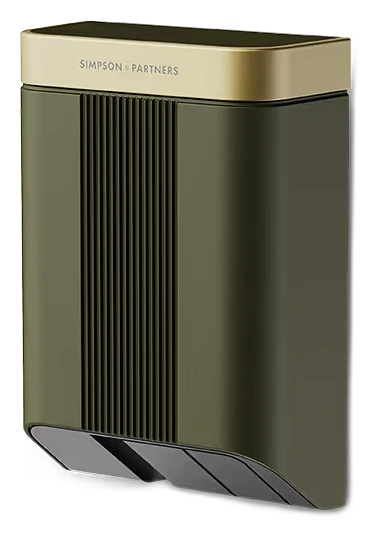
The Simpson & Partners Home 7 is a premium home EV charger aimed at drivers who want strong build quality, neat styling, and a sleek design that stands out visually. It sits in the UK’s upper mid-range, with a clear focus on design, convenience, and long-term use, not just rock-bottom price.
While most EV chargers are built primarily for functionality rather than aesthetics, Simpson & Partners sets itself apart by emphasising visually appealing designs that integrate neatly with home exteriors.
If you’re comparing a 7kW charger for a typical single-phase home, this one’s really worth a look. It supports tethered and untethered use, includes smart charging, and is built for buyers who care about both looks and practical daily use.
At a Glance: What Buyers Need to Know First
The Simpson & Partners Home 7 is a home EV charger built for UK homes needing reliable overnight charging with a refined look. It’s a single-phase charger delivering up to 7.3kW (32A); aimed at those who want smart control and a clutter-free setup. The Home 7 is also compact, smaller than a sheet of A4 paper.
Who the Charger Is Best Suited To
This charger is for you if you want a neat wallbox with a premium finish and the option to use it as a tethered or socketed unit. It’s a strong match for homes where the charger will be visible from the street, since styling is one of its main strengths. The Home 7 is particularly appealing to EV owners who value both aesthetics and functionality, reflecting the growing number of EV owners driving demand for home charging solutions.
If you value straightforward smart charging and don’t need a long list of advanced energy features, it’s a good fit. It’s more about quality, simplicity, and flexibility than deep automation. For safety and compliance, always ensure installation is carried out by a qualified electrician.
Key Strengths and Trade-Offs
Main strengths: compact design, sturdy build, and flexible use with tethered and untethered charging. The app is simple, and the unit feels well made in daily use, thanks to the use of premium materials that enhance both quality and appearance.
The trade-off is price; you’re paying a bit extra for design, finish, and the premium materials used. If you’re all about squeezing every feature out of your budget, there are cheaper options with broader smart home functions. The Plus models offer solar integration for those who want it.
How It Fits Into the UK Home Charging Market
In the UK, the Home 7 sits among premium domestic chargers, not bargain-basement models. It competes with products that care about appearance, build, and ease of use. The Home 7 faces competition from other chargers such as Pod Point and EO Charging, both of which are well-known brands in the UK market for their EV charging solutions. Drawing on a classic British design palette, Simpson & Partners focuses on creating “architectural furniture” that blends seamlessly into home architecture.
Models, Charging Speeds, and Configuration Options
Simpson & Partners offers more than one version, so you’ll want to choose carefully based on your home supply and how much control you need. There’s a standard 7kW model, a higher-spec plus version, and a three-phase option for homes with the right electrical setup. For added flexibility, an untethered version is also available, allowing users to use a removable cable instead of a fixed one.
Buyers also have the flexibility to use their own electrician for installation if they prefer.
Home 7, Home 7 Plus, and Home 22 Plus
The standard Home 7 is the entry model, built for typical single-phase homes. The Home 7 Plus adds enhanced features and more advanced functionality, including solar compatibility and the ability to integrate with solar systems for greener charging, while the Home 22 Plus is for three-phase properties that can use faster charging.
For most UK homes, the 7kW version is the practical choice. If you want solar support, wireless energy management, or the widest choice of colours, check out the Plus variants.
Single-Phase 7kW vs Three-Phase 22kW Charging
A 7kW unit is standard for domestic charging in the UK, and well suited to overnight top-ups. Most home EV chargers operate at around this speed on a single-phase supply; the Home 7 delivers up to 7.3kW. The Home 22 Plus offers much faster charging for homes with access to three-phase power.
For most people, the 7kW charger is plenty for daily driving. Unless you have a specific reason to upgrade, the 7kW model is usually the way to go.
Socket, Tethered Charger, and Flexible Tethered Mode
The Home 7 works as a socket model or a tethered charger, with a dedicated tethered version available. Tethered chargers feature a fixed charging cable for daily convenience, while untethered chargers use removable cables for greater flexibility and compatibility with various electric vehicle models. The Home 7’s tethered form offers the convenience of a permanently attached cable, eliminating the need to handle separate cables, while the untethered version allows for adaptability if you switch vehicles or prefer different cables.
Thanks to its cable lock function, the Home 7 securely locks the charging cable in place, effectively combining the benefits of both tethered and untethered options. This feature allows you to easily swap cables when needed and helps prevent damage by keeping the cable securely attached, adapting to your charging needs.
Design, Build Quality, and Everyday Practicality
The Home 7 stands out because it looks and feels more polished than most home chargers. The design is compact, and the materials set it apart from most plastic-bodied chargers on the wall, with hand-sprayed powder-coated metal fronts and the option of metal or wood lids. The charging cable is thoughtfully integrated into the design, allowing it to be wrapped or stored inside the unit for a tidy and aesthetically pleasing appearance.
You can choose from over 100 different colour combinations, allowing you to customise the Home 7 to match your personal style or home aesthetics.
Compact Size, Materials, and Finish Options
You get a small enclosure that doesn’t dominate your wall; handy if your driveway or garage space is tight. Simpson & Partners offers a range of metal finishes and lid options, including wood caps, with colours chosen to suit a classic British design palette, allowing for personalisation and a distinctive look.
In use, the smaller body makes it less intrusive than bulkier units. Options for colour and finish personalisation let you tailor the charger to your home design preferences.
Durable Metal Front and Grey Composite Cap
The durable metal front gives the charger a solid feel, while the cap options add to the refined finish. Together, they make the unit feel more carefully put together than many plastic-heavy rivals, and it’s built for outdoor installation.
Courtesy Lights, Cable Security, and Visual Appeal
The courtesy lights are a practical touch; they show status clearly without making the unit look overdone. Cable management is tidy, especially in socket form if you store the lead when you’re done. A handy feature is the easy cable storage and management, which keeps the unit looking neat and organised.
If you want your charger to look clean and controlled on the wall, the Home 7 does that job well.
Smart Features, App Control, and Energy Management
The Home 7 keeps the software side simple, which is great if you want clear controls instead of a crowded app. The focus is on scheduling, cost tracking, and basic charge control. With the schedule charging feature, you can set specific times for your EV to start charging, helping you take advantage of cheaper electricity rates and align with your daily routine. You can also control charging remotely via the app; start, stop, and monitor charging sessions from anywhere for added convenience.
For homes with multiple high-power devices, the Home 7 supports load balancing via its energy manager to prevent overloads. Solar integration is available on Plus models, allowing you to use surplus solar energy for efficient, cost-effective charging. The system can also work with smart tariffs, letting you optimise charging costs by taking advantage of lower rates during off-peak hours, such as those offered by Intelligent Octopus Go and OVO Charge Anytime.
Simpson & Partners App and Smart Setup
The Simpson & Partners app is easy to follow, and setup is straightforward. The app connects directly to the charger via Bluetooth or Wi-Fi. The chargers are designed for compatibility with smart tariffs, including Intelligent Octopus Go and OVO Charge Anytime, making them flexible for different billing plans. Simpson & Partners also runs its own support service for setup and troubleshooting. In practice, you can get to the useful functions quickly, without jumping through hoops.
The free app covers essentials like scheduling, charge locking, and session tracking. It’s not overloaded with extras, but it does what most people need.
Bluetooth Smart Charging and Wi-Fi Smart Charging
The charger supports Bluetooth smart charging, which is handy during setup or if your home internet is down. It also supports Wi-Fi smart charging for normal day-to-day use from your phone.
That dual approach gives you a practical backup if your network is flaky. Note that Bluetooth connects to one device at a time, while Wi-Fi supports more than one. It’s a nice detail, especially if you like to keep some control local as well as online.
Load Balancing, Load Management, and Energy Monitor
The charger can work with load balancing and load management, which helps reduce the risk of overloading your home supply. That’s important if you run other heavy appliances at the same time.
The energy manager (wired as standard, with a wireless option on Plus models) helps keep tabs on household demand. If you want to avoid nuisance trips and keep energy use under control, that’s one of the charger’s more useful strengths. PEN fault protection comes as standard.
Installation, Safety, and Running Costs
A proper EV charger installation matters as much as the charger itself, and the Home 7 is designed to fit standard domestic setups. Straightforward installations are usually completed in a single visit by a qualified electrician, and costs vary by installer and property. Most homes are already suitable for EV charger installation, but the installer will advise if any upgrades to the electrical supply are required. Home chargepoints often fall under permitted development in England, but check the conditions for your property, particularly for listed buildings. Simpson & Partners also offers freestanding chargers for properties without a suitable wall. You’ll still need a qualified installer to check your supply, cable runs, and the best mounting position.
What Standard Installation Usually Includes
A standard installation usually covers mounting the charger, wiring it to your consumer unit, and doing basic commissioning. It assumes a straightforward route with limited extra materials.
If your property needs drilling through thick walls, longer cable runs, or more complex routing, you’ll probably pay extra. That’s standard for home EV charger installation in the UK.
Home EV Charger Installation Requirements and Siting
For best results, put the charger where your car parks naturally and where the cable can reach the charge port without strain. Your installer will check if your supply and consumer unit can support a 7kW unit safely. While you can use a local electrician for installation, it’s important to research and choose the best charger for your needs rather than relying solely on what a local electrician recommends or has available.
Safety Features, Protection, and Ongoing Ownership Costs
The charger is built with practical safety features, including PEN fault protection and load management; Simpson & Partners specifies that any upstream RCD should be Type A. The energy manager adds another layer of control for home energy use.
Running costs depend mostly on your electricity tariff and how often you charge, not the charger itself. The Home 7 is also compatible with Intelligent Octopus Go and OVO Charge Anytime, enabling off-peak charging and cost savings through smart scheduling.
How It Compares With Other UK Home Chargers
The Home 7 competes in a busy premium market, where design, app quality, and energy features all matter. It is positioned alongside other established UK home charging brands such as Pod Point.
Compatibility with smart tariffs is a key differentiator. The Home 7 supports integration with Intelligent Octopus Go, enabling scheduling that takes advantage of cheaper overnight rates and helping users save on charging costs. OVO Charge Anytime is also supported, provided you have a compatible vehicle and connect the chargepoint to the tariff.
Long-term reliability and ongoing software support are worth weighing up when choosing any home EV charger, so it helps that Simpson & Partners backs the Home Series with a long warranty and its own UK support team.
Simpson & Partners Home 7 vs Ohme Home Pro
Compared with the Ohme Home Pro, the Home 7 is stronger on premium design and physical build. The Ohme usually wins if you want more advanced tariff automation and more active smart charging logic.
If you want a simpler, more elegant charger with flexible configuration, the Home 7 makes sense. If you want heavy tariff integration and hands-off scheduling, Ohme may suit you better.
Where It Sits Against Zappi, Hypervolt, and Indra Smart Pro
Against Zappi, the Home 7 is less focused on solar-first charging. Zappi is usually the better fit if you already have solar PV and want deeper renewable integration. However, the Home 7 Plus does offer solar integration features.
Against Hypervolt, the Home 7 looks more understated and refined, while Hypervolt leans into compact styling and app features. Against Indra Smart Pro, the Home 7 feels more design-led, while Indra is often chosen for strong tariff support and robust practical features.
When It Is the Right Choice and When It Is Not
Choose the Home 7 if you want a premium-looking charger with solid everyday function and a simple app. It’s also for you if you value flexibility between socketed and tethered use.
It’s probably not for you if your top priority is the lowest price, the deepest solar automation, or the most advanced tariff control. The Home 7 is designed to blend seamlessly into your home architecture, rather than looking like a utilitarian car accessory.
FAQs
What are the key specifications and features of this 7kW home EV charger?
The Simpson & Partners Home 7 is a single-phase charger delivering up to 7.3kW, featuring smart app control, energy management, scheduling, and flexible socket or tethered use. Compact; smaller than a sheet of A4 paper; and offering over 100 colour combinations, it's designed for everyday home charging with a focus on premium build quality and simple controls.
Is this home EV charger compatible with my electric vehicle and supply setup?
It's suitable for most UK electric vehicles that charge through a Type 2 connection, which covers the majority of current models. Your installer will also need to confirm your home supply can support a 7kW setup safely.
How do customer reviews rate the reliability and ease of use of the charger?
Feedback is generally positive on build quality, appearance, and ease of daily use. The app is usually described as practical rather than advanced, so it suits you best if you want clear control without too much complexity, and Simpson & Partners runs its own support service for technical issues.
How much does a typical 7kW home charger installation cost in the UK?
A straightforward installation is often priced as a standard job, while extra work such as longer cable runs, trenching, or more complex routing adds cost. In the UK, the final price can vary a lot by property, so you should always compare like-for-like installation quotes.
Can I prevent someone from unplugging my car while it's charging?
If your charger or app has a cable lock or locking feature, use it. Whenever you can, keep the charger itself in a spot that's not easy to access. A tethered setup is also a solid option since the lead stays fixed to the unit.