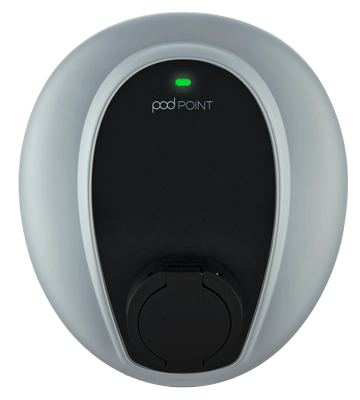
The Pod Point Solo 3 EV Charger is a solid pick for EV owners seeking a home EV charger that is straightforward, easy to use, and works with most UK electric cars. It covers the basics, including scheduled charging, app control, and a choice between tethered or untethered, without overcomplicating things.
The Solo 3 puts its emphasis on reliability and user-friendliness rather than a long feature list.
Key Takeaways
-
The Solo 3 is all about simple, dependable home charging.
-
Tethered or untethered? You can pick what fits your setup.
-
Works for most UK homes, especially if you want to charge off-peak.
-
A future proof choice, the Solo 3 offers adaptability and ongoing support, making it a smart investment for evolving EV technology.
What The Solo 3 Range Offers
The Solo 3 keeps things familiar but trims down the design, smaller, a bit sleeker, and still very much a smart charger. It features a sleek, oval design with a durable polycarbonate case, offering greater impact resistance compared to previous models.
Inside, a new circuit board and revised wiring configuration provide more efficient use of space, making installation easier and tidier. The design allows for cable entry from multiple directions, including left, right, bottom, or rear, further simplifying the installation process. The Solo 3 is designed for straightforward wiring and setup. Installation typically involves mounting the unit on an outside or garage wall and running the supply cable through to it, so proper placement and wiring matter. The unit offers reasonable space inside for wiring, which makes the job simpler for installers.
Solo 3 And Solo 3S Variants
Pod Point calls its home charger lineup “Solo 3,” but there are variants for different habits and home setups, including the Pod Point Solo 3S. The Solo 3S model introduces new features such as enhanced smart charging capabilities, solar integration, scheduling, and improved safety, making it especially suitable for home use and renewable energy compatibility. You are really choosing between how it connects, how much power it delivers, and sometimes solar compatibility.
The newer Solo 3 is more compact and has a tougher polycarbonate shell, which is a notable upgrade over the previous model’s ABS case, offering improved durability and weather resistance. This design also features a more organised wiring configuration compared to the previous model, making installation simpler and more efficient.
Tethered Vs Untethered Options
Choose the tethered Solo if you want a cable always ready to go. This tethered version features a tethered cable for convenience, making daily charging simple and tidy. The cable wraps neatly around the unit when not in use, maintaining a clean appearance and easy cable management. Tethered models also include a built-in charge port, which makes the unit slightly larger compared to the untethered version, but allows for easy cable management and includes a holster for wrapping the cable neatly.
Opt for the untethered version if you prefer a neater look and already have a Type 2 cable. The untethered version is larger and bulkier due to the absence of a built-in charge port, so it requires more wall space, but offers flexibility if you want to use your own cable or swap between two cables of different lengths or types.
The Solo 3 supports Type 2 (IEC 62196-2), which covers nearly all modern UK EVs. If you want the easiest routine, the tethered Solo is usually the winner for its built-in cable and streamlined charging experience.
Power Outputs And Charging Speeds
You get 3.6kW, 7.4kW, and 22kW options. For most UK homes, 7.4kW is the sweet spot, fast enough overnight, and you do not need three-phase power.
A 7.4kW charger will add up to 30 miles of range per hour, depending on your car and the weather. If you are on single-phase, which is most of us, 7.4kW is probably your target.
Who It Suits Best
The Solo 3 is for you if you want a reliable home charger with a clear app and easy scheduling. As a cost-effective solution for electric vehicle owners, it is a stylish charger that balances affordability and modern design, blending seamlessly with your home while delivering dependable performance. It is a sensible choice if you do not want to spend evenings fiddling with settings.
If you are after advanced tariff automation or deep solar integration, there are other wallboxes with more bells and whistles.
Charging Performance And Everyday Use
Day to day, the Solo 3 delivers reliable performance and a positive charging experience, thanks to its key features such as robust build quality, smart app integration, and flexible charging capabilities. To start charging, users simply plug in their vehicle and can use the app or set a schedule to begin the session. It is designed to just sit quietly and get on with the job, with a simple status light providing at-a-glance information about your charging status. After charging, users can simply unlock the connector to disconnect their vehicle with ease.
Home Charging Speeds In Real Terms
The 7.4kW model is the main event for most UK homes. Come home with a low battery, plug in overnight, and you are set for the morning.
This is not about matching public rapid chargers; it is about predictable, low-stress charging at home.
Scheduled And Overnight Charging
Scheduling is a real highlight. The Pod Point Solo 3 allows users to schedule charging and schedule charging sessions, letting you set charging windows to match cheap overnight electricity and optimise for off-peak rates. This charge scheduling feature not only maximises cost savings and convenience but also ensures compliance with the Electric Vehicles (Smart Charge Points) Regulations 2021 in the UK.
Once you have set it up, the charger just gets on with it. No need to think about it every night. While the Solo 3 includes basic smart features like scheduling, it may lack more advanced dynamic tariff integration found in some competitors.
App Controls And Charging Session Tracking
The Pod Point app lets you tweak schedules, track costs, and monitor individual charging sessions, including public charging sessions. You do not have to make an account to charge, but it is helpful if you want to track usage, manage expenses, and view detailed charging history.
The app stores your charging history, making it easy to monitor your electricity usage and manage costs over time. Drivers who charge a company car at home can use that session history when reporting charging for expense claims.
It is best if you keep it simple: check if a session started, ended, or stuck to your schedule.
Public Charging Compared With Home Charging
Home charging is almost always cheaper and far more convenient than public points. You plug in, go to bed, and wake up ready to roll.
Public charging has its place for road trips, but it is not a replacement for home charging if you drive daily. Pod Point chargers are widely available at public charging stations across the UK, and to begin charging at a public Pod Point charger, you simply ensure the charger is powered on, connect your vehicle, and follow the prompts in the Pod Point app to activate and monitor your charging session.
Installation, Safety And Compliance
Installation day with Pod Point typically involves a straightforward process, where the charger is professionally installed by a certified engineer. Pod Point uses a network of certified installers across the UK, ensuring a professional service and extra peace of mind through careful setup and thorough safety checks, such as installing a separate fuse box if needed and involving you in key decisions. Pod Point is also accredited for workplace chargers, demonstrating their expertise in both home and workplace charging station installations. The process starts with a pre-installation survey to check your home’s suitability, followed by a site check and supply confirmation. Once everything is ready, the charger is installed and commissioned; how long the job takes and the lead time from ordering depend on your home and installer availability. Pod Point’s customer service can also handle grant paperwork on behalf of eligible customers, streamlining the process and making it easier to access financial assistance. A qualified electrician, registered with the Competent Person Scheme and holding a chargepoint installation qualification, must install the Pod Point Solo 3. For safety, only Type A RCD/RCBOs are required at the source for the Solo 3, which includes 6mA DC vehicle fault protection.
What Standard Installation Usually Includes
Standard install covers mounting the charger by your parking spot, running up to 3 metres of cable run from the consumer unit, wiring it up, and testing everything. The installer will also check you can actually reach your car with the cable.
Pod Point sells the Solo 3S fully installed, with the tethered version costing slightly more than the untethered, including standard installation. If your consumer unit is further away or your setup requires a longer cable run or additional work, extra cost may apply. That is just how it goes with longer cable runs or tricky layouts.
Pre-Installation Checks And Forms
You will usually fill out a pre-install form before install day. This lets the installer spot any issues early, like tight spaces, odd fuse boxes, or extra work needed.
Catching problems early saves everyone hassle.
Load Management And Household Supply Limits
If your house already uses a lot of electricity, dynamic load management is important. It stops you overloading the system when the charger is running. The Pod Point Solo 3 includes auto power balancing, which automatically adjusts the charging rate to prevent overloading your home’s electrical supply when other appliances are in use.
Older homes or places with lots of appliances might need extra checks before install.
Safety Protections And OZEV Considerations
The Solo 3 has all the modern safety features, including failed earth protection and RCD protection. That is standard these days, and it does matter.
It has also been eligible for the OZEV grant before, but those rules change. Always check current grant and VAT details before you commit, especially if you are comparing install quotes.
Smart Features, Software And Solar Readiness
You get the core smart features, including scheduling, app control, and not much clutter. The Solo 3 is connected via your home WiFi, enabling smart functionality such as remote control, scheduling, and monitoring through the app. Units support Wi-Fi connectivity for over-the-air software updates and remote diagnostics, ensuring your charger stays up to date and any issues can be addressed remotely.
The Pod Point Solo 3 is solar compatible, meaning it can work with solar panels to utilise solar power for charging your EV. Home EV chargers like the Solo 3 can also offer solar integration options, allowing you to charge with excess solar energy and reduce your carbon footprint. It is not the fanciest charger out there, but it does the essentials well.
Pod Point App Features That Matter Most
The app is where you set schedules, check charging status, and review sessions, allowing you to track charging sessions and monitor for the cheapest rates. That is helpful for timing your charging to cheap electricity. However, while you can monitor for the cheapest price, the app does not allow you to input dynamic tariff rates or set the cheapest price for electricity at various times, unlike some competitors.
Additionally, the app lacks some smart features found in rival chargers, such as a boost button to override charging schedules and the ability to input kWh price caps for energy cost management. Some rival chargers offer a boost override and more granular controls, so if you want that level of flexibility it is worth comparing before you buy.
Over-The-Air Updates And Connectivity
Solo 3 supports over-the-air updates, so Pod Point can tweak software or fix bugs without a service call. That is a big plus.
Make sure your Wi-Fi is decent where the charger goes. Smart features need a reliable connection.
Solar Compatibility And Future-Proofing
The Solo 3 is not really a solar-first charger, though the current Solo 3S adds solar integration. The Solo 3S offers a Solar mode, charging purely from your excess solar generation, and a Solar and grid mode that tops up solar with a small amount of grid energy. If that is important, double-check the model before ordering.
Most buyers just want something that will still be useful in five years. The Solo 3 is solid for that if you are mostly charging off-peak at home.
Where Rivals Offer More
Some rivals have deeper tariff integration and better solar matching. If you want the charger to respond to live electricity prices, you will want to look elsewhere.
Once installed, the Pod Point Solo 3 needs little setup or configuration to start charging. Pod Point’s main strength is simplicity: you get a dependable charger, even if it is not the most automated.
Costs, Warranty And Overall Value
The Solo 3 is priced in the mainstream bracket, so value depends on what is included and how tricky your install is. Pod Point also offers an exclusive EV energy tariff, Pod Power, in partnership with EDF, which can reduce the cost of overnight charging. A 3-year warranty on the charger and installation comes as standard when you buy upfront, rising to 5 years if you take the Pod Drive subscription plan.
With the Pod Point app, you can easily track charging costs by monitoring individual charging sessions, adding your tariff rates, and viewing your energy consumption. This helps you control your energy expenditure, manage your money, and optimise charging times for maximum savings.
Upfront Pricing And Installation Extras
Upfront cost changes depending on tethered/untethered and power output. Installation can cost more if you need longer cable runs or extra electrical work.
Some deals include standard install, which looks good at first glance. Always check the fine print, as extras can bump up the price.
Running Costs And Tariff Savings
Your real savings come from your energy tariff, not the charger itself. Scheduled charging on an off-peak tariff can cut your costs a lot.
It is worth comparing EV tariffs before you buy. The right one can make a real difference to your annual charging costs, especially if you charge overnight most of the time.
Warranty Cover And Long-Term Ownership
Pod Point offers a 3-year warranty as standard, extended to 5 years on the Pod Drive plan, which is reassuring if you plan to keep the charger through a few cars.
Do not just look at the years, though. Check what is actually covered, how claims work, and if install problems are included.
Buying Outright Vs Pod Drive
Pod Drive lets you spread the cost over three years with a monthly payment plus a one-off fee, and it extends the warranty to 5 years. It is handy if you do not want to pay everything upfront.
Buying outright is simpler if you want full control from day one. When comparing, factor in install extras, running costs, and any finance terms.
How It Compares With Other Home Chargers
The Solo 3 stands out for its robust build quality, offering a durable polycarbonate case and reliable engineering that inspire user confidence. While it may not be packed with every advanced feature, its key features, such as straightforward app integration, solid safety standards, and flexible power ratings, deliver a dependable and user-friendly charging experience. This practical approach suits those who value simplicity and reliability over extensive automation.
Best For Simplicity Vs Best For Solar
If you want easy scheduling and a simple setup, the Solo 3 is a solid choice. If you are focused on solar, you might want a charger that is built for PV integration.
If you have already got panels or plan to get them, that distinction matters. For plain home charging, the Solo 3 is an easy unit to live with.
Design And App Experience Compared
Looks-wise, the Solo 3 features an oval shape that makes it a stylish charger, blending modern aesthetics with practical design. This shape not only enhances its appearance but also allows for tidy cable management, as the cable can be wrapped neatly around the unit itself. The app does what it needs, offering clear tracking and scheduling.
Some rivals have slicker software and more energy automation. If you want the charger to do more of the thinking, there are other options.
When A Different Charger May Be Better
If you need tight solar integration, more dynamic charging, or a premium finish, another brand might suit you better. That is especially true if your home energy setup is more complicated.
Compatibility is not usually an issue: most modern EVs work fine. The real question is whether you want a basic, reliable unit or something with more control and features.
Frequently Asked Questions
How many kW does the Solo 3 deliver and what charging speeds can you expect?
Solo 3 comes in 3.6kW, 7.4kW, and 22kW, but 7.4kW is by far the standard for UK homes. Expect up to 30 miles of range per hour at 7.4kW, though it varies with your car and setup.
How much does it cost to buy and install one in the UK?
Total cost depends on the model, install complexity, and any extra electrical work. Some offers bundle standard install, but tricky jobs with longer cables or upgrades will cost more.
Where can you download the user manual and installation instructions?
Pod Point’s documentation and support pages have user manuals and install guides. If you are booking an install, your installer should bring the right paperwork for your model.
Why is there no light on the unit and how do you resolve it?
No light? Check the power supply, isolation switch, and see if it has tripped. If it is still dead, it could be the wiring or charger itself. Call your installer or support before you try to reset anything.
What troubleshooting steps fix it when it will not charge or keeps faulting?
Check the cable connection, make sure the car is locked, and look at your app schedule. If it keeps faulting, check supply issues, RCD trips, or unreliable Wi-Fi if you are using smart features.
How can you prevent someone unplugging the charging cable from your car?
A tethered charger helps here, since the cable is fixed to the unit itself. Most cars will also lock the connector while charging, so the plug cannot be removed until you stop the session or unlock the vehicle.
If your car supports it, turn on the charge port lock feature. It is worth checking in the app or your vehicle settings to see if there are options for cable locking.