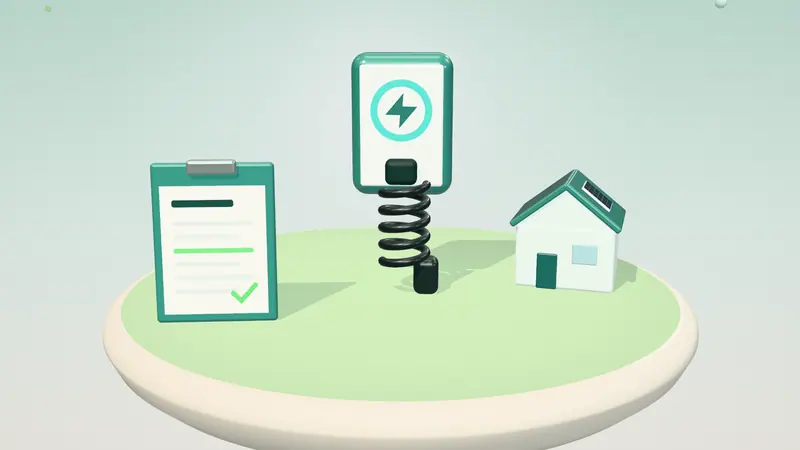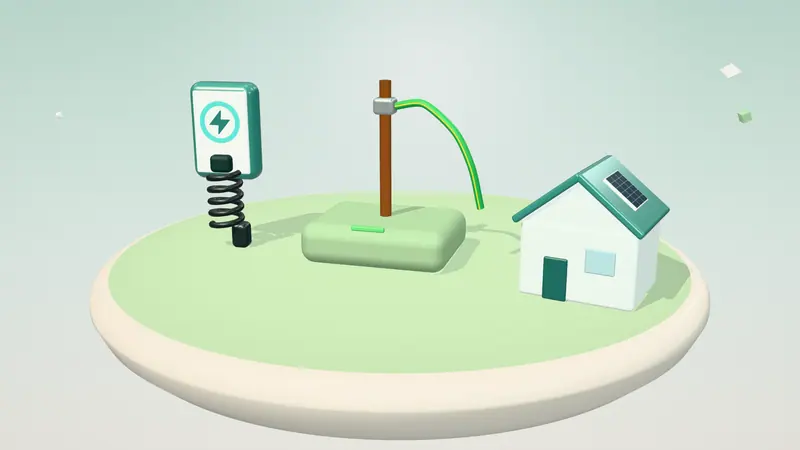

Since 21 October 2026, households in England without a driveway can fit a wall or post-mounted home charger and run the cable to a car on the street without applying for planning permission, saving up to £300 according to the government. The cable must cross the pavement through a cable channel authorised by the council, the charger must be the only one at the property, no higher than 1.6 metres and outside a conservation area. Council permission is still needed for the channel, and the on-street parking grant pays up to £500 until 31 March 2027.
The fastest way to get oriented
21 October 2026, when SI 2026/1056 came into force in England.
One wall or post-mounted chargepoint within the curtilage of your house or block of flats, no higher than 1.6 metres, outside a conservation area, with the cable crossing the pavement through an authorised cable channel.
Yes. The highways authority must install or authorise the cable channel, and may require a Section 50 licence.
Up to £500 through the chargepoint grant for households with on-street parking, funded until 31 March 2027.
Cross pavement EV charging in England no longer needs planning permission. Since 21 October 2026, a household that parks on the street can fit a home charger and run the cable to the car through a channel in the pavement without a planning application. The Department for Transport says this saves up to £300 on installation.
The change comes from a new planning order, made on 25 September 2026, which extends the permitted development rights for EV chargers to homes without off street parking. You still need the local authority’s agreement for the channel itself, and the charger has to meet a short list of conditions.
What has changed for cross pavement charging
Until now, permitted development rights only covered chargers in an area lawfully used for off street parking. Anyone who parked on the street needed full planning permission for a home charger, unless their council had a local development order in place. The Department for Transport’s guidance for councils said exactly that.
The new order changes two classes of permitted development:
- Class D covers a charger mounted on a wall.
- Class E covers a charger mounted on a post, which the rules call an upstand.
Both now apply within an area used for off street parking or anywhere else within the curtilage of a house or a block of flats. That second part is what opens up home charging to residents with on street parking.
The rules your charger has to meet
The new rights come with conditions. If the installation breaks any of them, you are back to needing planning permission.
| Rule | What it means |
|---|---|
| One charger only | No more than one outlet within the curtilage of a house or block of flats |
| Height | No higher than 1.6 metres above ground level |
| Conservation areas | Not permitted in a conservation area |
| Walls next to the pavement | Sticks out no more than 0.2 metres from the wall |
| Pavement width | At least 1.5 metres of footway left between the charger and the kerb |
| Cable crossing | The cable must cross the footway through an authorised cross-pavement solution |
| Dedicated charger | A chargepoint, not a standard three-pin plug socket |
The order defines a cross-pavement solution as a pavement-embedded cable channel that lets a charging cable safely cross a footway from a home to a parked car. “Authorised” means installed by, on behalf of, or with the authorisation of the highways authority.
Cable covers and mats laid on top of the pavement are not a cable channel, so they do not qualify under these rules. Existing limits on permitted development, such as those for listed buildings, are not removed by this order, so check before you book an installer.
Cross pavement EV charging still needs the council
Scrapping planning permission removes one step, not all of them. The channel sits in the public highway, which the local highways authority controls.
Section 50 licences and council schemes
The government’s guidance explains that anyone who is not a utility company or other statutory undertaker needs a Section 50 licence from the highways authority to place apparatus in the street. A key part of that licence is who maintains the channel, reinstates the pavement and removes it when it is no longer needed.
Councils run cross pavement charging in different ways. The guidance describes two ownership models:
- Council owned. The council owns and maintains the channel and the resident pays a one-off fee or a subscription. At Milton Keynes City Council, the resident pays for a survey and a highways-approved contractor, and the highways team keeps liability for the channel for three years, after which the resident can extend permission for an annual fee.
- Supplier owned. The channel supplier keeps ownership and handles maintenance once the council grants permission. After trials with the London Borough of Brent and Oxfordshire County Council, residents were offered a two-year contract for a small fee.
What residents usually have to agree to
Council terms set out in the guidance commonly include:
- Public liability insurance. Milton Keynes City Council asks residents to hold it against claims arising from misuse of their charging equipment.
- An electrical safety certificate. The guidance says a resident should not use the channel until they have provided one for the home charger.
- No reserved space. A channel does not give you ownership of, or priority for, the parking space outside your home. You cannot put out cones or signs. Schemes are designed to work without reserved bays or additional street furniture.
- Trip hazard rules. Taking the cable away when not charging, and not leaving spare cable on the footway.
- Telling the council when you move. Central Bedfordshire Council asks residents to notify it so it can agree terms with the new occupier.
Trailing cables across the pavement without the highways authority’s consent is a separate matter: Section 178 of the Highways Act 1980 bars placing a cable over, along or across a highway without it.
Cross pavement charging grants
The electric vehicle chargepoint grant for households with on-street parking pays up to £500 towards installing a chargepoint with a cross-pavement solution. You must own or rent the property and only have on street parking (OZEV). The grant covers the chargepoint installation; other costs, such as electrical work at your home, may not be covered.
The grant rate rose from £350 to £500 per socket on 1 April 2026, and the scheme is funded until 31 March 2027. The Office for Zero Emission Vehicles describes this as the grants’ final year, so the closing date matters if you are planning ahead.
Councils have also had money for channels. The £25 million EV pavement channels grant funded Tier 1 local authorities in England to install them during 2025 to 2026. That fund is now closed. Earlier council trials used other money: in January 2023 Nottinghamshire County Council received Local Electric Vehicle Infrastructure (LEVI) pilot funding to trial up to 300 cable channels.
Why it matters for drivers without off street parking
Home charging lets you use a domestic EV tariff. The government says cross-pavement charging gives access to charging “for as little as 2p per mile” and running cost savings of up to £1,750. By comparison, Zapmap’s price index put the average pay as you go price on the public network in September 2026 at 54p per kWh on slower chargers and 79p per kWh on rapid and ultra-rapid chargers.
Vicky Edmonds, chief executive of EVA England, said the group’s research found, as quoted in the government’s announcement, that 60% of petrol and diesel drivers without off street parking would never consider an EV. “It’s now up to local authorities and landlords to make these solutions easier to access in practice,” she said.
What else is changing
The same announcement opened two consultations, both closing on 16 December 2026:
- Tenants and leaseholders. Guidance for landlords on handling requests for a charger, and whether to make it harder for landlords and freeholders to refuse.
- Building regulations. Whether new and refurbished covered car parks must have chargepoints.
The order also eases the rules for equipment housing at larger public charging hubs in non-domestic car parks.
What to do next
- Check your council’s website for a cross pavement charging or cable channel scheme, and what it costs.
- Check whether you are in a conservation area or your home is listed.
- Ask a chargepoint installer to confirm the charger position meets the height, projection and pavement-width rules.
- Apply for the on-street parking grant through your installer before 31 March 2027.
- Compare EV tariffs so you are on a cheap overnight rate from day one.
For the other ways to charge without a driveway, read our guide to EV charging without off street parking.
Rates correct as of October 2026. Planning rules differ outside England and council schemes vary, so check with your local authority before you buy a charger.
Key Takeaways
- Planning permission is no longer needed for cross pavement EV charging in England from 21 October 2026, if the conditions are met.
- The cable must run through a pavement-embedded cable channel authorised by the highways authority; cable covers and mats do not qualify.
- Only one charger per property, no higher than 1.6 metres, not in a conservation area, and at least 1.5 metres of pavement left clear.
- You still need the council's permission for the channel, and often public liability insurance and an electrical safety certificate.
- The on-street parking chargepoint grant pays up to £500 until 31 March 2027.
- The change applies to England only; Scotland, Wales and Northern Ireland have their own planning rules.
Frequently Asked Questions
Do I need planning permission for cross pavement EV charging?
Not in England since 21 October 2026, as long as the charger meets the conditions in the new permitted development rights. It must be your only charger at the property, sit no higher than 1.6 metres, stay out of conservation areas and, where the cable crosses a footway, use a cable channel authorised by the council.
Do I still need the council's permission?
Yes. The cable channel sits in the public highway, so the local highways authority has to install it, have it installed or authorise it. Councils run their own schemes, and the government's guidance says a Section 50 street works licence may be needed.
Can I run a charging cable over the pavement with a cable cover?
Not under the new planning rights. They only apply where the cable crosses the footway through a pavement-embedded cable channel, so a cover or mat laid on top does not count.
Does the change apply in Scotland, Wales or Northern Ireland?
No. The order changes the permitted development rules for England. Scotland, Wales and Northern Ireland run their own planning systems, so check with your council there.
Is there a grant for cross pavement charging?
Yes. The electric vehicle chargepoint grant for households with on-street parking pays up to £500 towards a chargepoint installed with a cross-pavement solution. It is funded until 31 March 2027.
Useful Resources
- The Town and Country Planning (General Permitted Development) (England) (Amendment) (No. 2) Order 2026 · legislation.gov.uk
- Drivers to save up to £300 when installing EV chargers at home, as government slashes unnecessary red tape · Department for Transport, 21 October 2026
- Cross-pavement solutions for charging electric vehicles · Department for Transport
- Electric vehicle chargepoint grants · Office for Zero Emission Vehicles
- Changes to electric vehicle chargepoint grant schemes from 1 April 2026 · Office for Zero Emission Vehicles