i4 eDrive40
BMW CCS
The 80.7kWh pack supports 205kW peak DC charging, a faster absolute charge rate than the Polestar 2 or Nissan Ariya despite a similar nominal capacity. Saloon form factor and grand-tourer refinement are unique on this list.
Electric cars
A larger usable battery gives you more range and, in most cases, lets you accept more charge per minute at a rapid charger. The key qualifier is usable kWh: manufacturers advertise a gross figure, but a buffer reserved at both ends of the pack typically reduces the driveable capacity by around 3-6%. Battery chemistry also changes how you live with the car day to day: LFP packs (used by BYD and some MG models) can be charged to 100% daily without degradation concerns, while NMC packs are best kept to around 80% for everyday use. These are the 10 EVs with the largest usable batteries on sale in the UK in 2026.
Every model that qualifies for this list, in alphabetical order. Tap any card for the full review and specs.
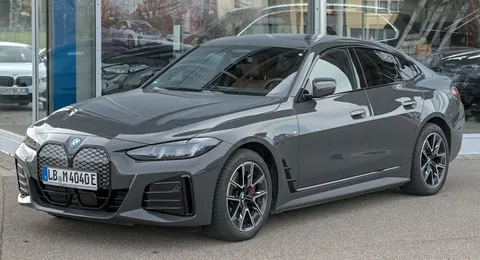
i4 eDrive40
BMW CCS
The 80.7kWh pack supports 205kW peak DC charging, a faster absolute charge rate than the Polestar 2 or Nissan Ariya despite a similar nominal capacity. Saloon form factor and grand-tourer refinement are unique on this list.
i4 M50
BMW CCS
Identical pack to the eDrive40 but dual-motor AWD pulls WLTP range down from 360 to 318 miles. Same battery, less range, substantially more performance; the M50 is the performance choice on this list.
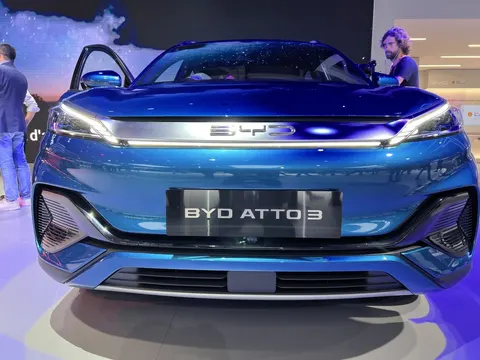
Atto 3 Extended Range
BYD CCS
The only LFP pack on this list at this capacity. LFP chemistry means you can charge to 100% daily without the long-term degradation concerns of NMC rivals; a significant practical advantage for daily commuters.
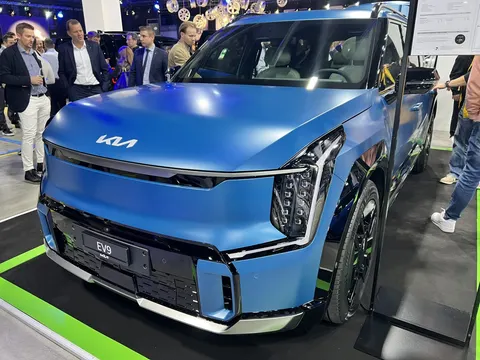
EV9 Air RWD
Kia CCS
The entry EV9 has the smallest pack of the three EV9s on this list, but the RWD drivetrain extracts more WLTP miles per kWh than the AWD variants, making it the most efficient EV9 on this page.
EV9 Earth AWD
Kia CCS
The largest usable battery of any mainstream EV on sale in the UK at 100kWh, combined with a seven-seat SUV body and 3.6kW V2L. No other production car in the UK currently pairs this pack size with this level of practicality.
EV9 GT-Line S AWD
Kia CCS
Same 100kWh usable pack as the Earth with GT-Line S specification and sportier trim. The 800V architecture supports 233kW peak DC charging, so the larger battery does not translate into slower charging.
Ariya 87kWh e-4ORCE Evolve
Nissan CCS
Same 87kWh pack as the FWD Evolve with dual-motor AWD and V2L added. The AWD drivetrain costs around 34 WLTP miles versus the FWD variant; the trade-off is all-weather traction.
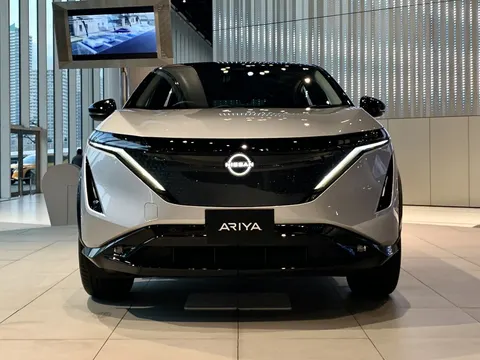
Ariya 87kWh Evolve
Nissan CCS
One of the few EVs in the UK that accepts 22kW three-phase AC charging; the 87kWh pack makes longer AC charge times less of a concern and extends real-world range between rapid stops.
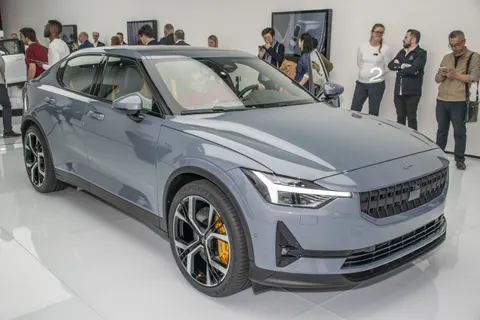
Polestar 2 Long Range Dual Motor
Polestar CCS
Same 78kWh pack as the single-motor; adding a second motor for AWD costs around 37 miles of WLTP range. The choice between the two Polestar 2s comes down to drivetrain priority: maximum range or all-weather traction.
Polestar 2 Long Range Single Motor
Polestar CCS
Extracts 391 miles WLTP from 78kWh, the most efficient use of battery capacity on this list by WLTP miles per kWh. A relatively modest pack size delivering the highest official range of any model on this page.
If you have compared the battery capacity a manufacturer advertises against the figure quoted by independent reviewers, you may have noticed a gap. That gap is intentional and exists to protect the battery.
A buffer is reserved at both the top and bottom of the usable range. The top buffer prevents the cells from being overcharged; the bottom buffer prevents deep discharge, which permanently damages lithium-ion and lithium iron phosphate cells. The battery management system enforces these limits automatically, so you never have direct access to the full gross capacity.
For modern EVs, this buffer typically reduces the usable figure by around 3-6% below the advertised gross capacity. A car sold with a 77kWh battery may therefore have a usable capacity of around 74kWh once the buffer is accounted for. Older or more budget-conscious models sometimes reserve a larger buffer; early Nissan Leafs were notable for this, which contributed to faster apparent range loss as cells aged at the margins.
Why does this matter in practice? Journey planning and charging calculations should be based on the usable figure, not the gross capacity. If a car's range claim is based on gross kWh and you plan around that, you will arrive at your destination with less charge than expected. The specs on this page use usable figures throughout.
Two battery chemistries dominate the current EV market: lithium iron phosphate (LFP) and nickel manganese cobalt (NMC). They behave differently in daily use, and the right choice depends on how you drive and charge.
LFP batteries are used in BYD models and some MG variants on this list. The key advantage is that they can be charged to 100% every day without meaningful degradation. LFP cells have a cycle life of approximately 3,000-5,000 full cycles to 80% capacity, compared to 1,500-2,500 for NMC. If you plug in every night and always charge to full, LFP is the more durable choice for your usage pattern.
The trade-offs are energy density and cold-weather performance. LFP chemistry stores roughly 20-30% less energy per kilogram than NMC, which means a heavier pack is needed for the same capacity. In cold weather, LFP chemistry is more affected than NMC; without pre-conditioning, range loss below 0°C can exceed 30%.
NMC batteries are used in the majority of EVs, including the Kia, Hyundai, BMW, Polestar, and Nissan models on this list. They offer higher energy density (more range per kilogram), better cold-weather performance relative to LFP, and a proven track record across a wide range of platforms. The main caveat is that NMC cells are best kept to around 80% charge for everyday use to preserve cycle life; charging to 100% regularly accelerates long-term capacity loss.
For UK drivers, a practical guide: if you commute daily, charge at home every night, and want to always charge to 100% without thinking about it, LFP suits your use case. If you want maximum range, better cold-weather performance, and are willing to manage your charge level, NMC delivers more capability per kilogram. Both chemistries average approximately 1.5-2.5% degradation per year under normal use, based on fleet data.
A common assumption is that a bigger battery means slower charging. In most cases on this list, the opposite is true.
Charging speed is determined by the car's peak DC charging rate, not the battery size alone. A 100kWh battery in a Kia EV9 with 233kW peak DC charging accepts energy far faster in absolute terms than a 60kWh battery limited to 50kW. The 10-80% charge time, the standard real-world benchmark, reflects both the charging rate and the battery size together.
The voltage architecture of the car is the biggest factor. The Kia EV9 and EV6 on this list use 800V architecture, which enables peak DC speeds above 200kW. Conventional 400V systems, used in the BMW i4, Nissan Ariya, and Polestar 2, typically peak at around 100-210kW depending on the model.
One caveat: charging above 100kW DC does accelerate battery degradation slightly. Research across large vehicle fleets suggests approximately double the annual degradation rate compared to AC home charging (around 3% per year versus 1.5%). For drivers who use rapid charging occasionally on long trips and charge at home the rest of the time, the practical impact over the battery's eight-year warranty period is minimal. For daily rapid charging, it is worth factoring in if longevity is a priority.
For everyday home charging, the battery size determines how long an overnight charge takes at a given wallbox output. A 100kWh battery on a 7kW wallbox takes approximately 14 hours from empty to full; on a 22kW three-phase supply (available on the Nissan Ariya), that falls to around 5 hours.
Gross capacity is the total energy a battery can theoretically store. Usable capacity is the portion accessible to the driver; the remainder is reserved as a buffer to prevent overcharging and deep discharge, both of which damage battery cells. The buffer typically reduces usable capacity by 3-6% below the advertised gross figure. All range claims and charging time estimates should be based on usable capacity.
The Kia EV9 Earth AWD and GT-Line S AWD both carry 100kWh of usable battery capacity, the largest available in any mainstream production EV currently on sale in the UK. The Mercedes EQS carries a larger gross capacity but is not included on this list; verify current UK availability and usable figures before comparing.
No. Range depends on both battery size and how efficiently the car uses that energy. The Polestar 2 Long Range Single Motor achieves 391 miles WLTP from 78kWh, outranging some cars with larger packs, because of its efficient drivetrain and aerodynamic design. A large battery in a heavy, high-drag vehicle will deliver less range per kWh than a smaller battery in an aerodynamically optimised car.
NMC chemistry performs better in cold weather. LFP batteries can lose up to 30% or more of their range below 0°C without pre-conditioning, whereas NMC batteries are less affected by cold temperatures. However, pre-conditioning an LFP battery while still plugged in significantly reduces cold-weather range loss, and most BYD and MG models include this feature.
Fleet data from large studies of real-world EVs suggests average degradation of approximately 1.5-2.5% per year. After eight years, the average EV retains around 81-82% of its original capacity. All models on this list carry an eight-year battery warranty; the specific capacity retention guarantee (typically 70-75%) and annual mileage cap vary by manufacturer.
Frequent use of rapid DC charging above 100kW accelerates degradation at approximately double the rate of slower AC charging. For drivers who rapid charge occasionally on long trips and charge at home overnight the rest of the time, the impact over the battery's usable life is small. Daily rapid charging is worth thinking about if long-term capacity retention is a priority.
For most drivers, a 70-80kWh pack covers real-world needs comfortably. A 100kWh battery is worth the premium if you regularly tow (where range loss is severe), make frequent long motorway journeys, or want the maximum possible range buffer in cold weather. The Kia EV9's 100kWh pack is also notable for V2L capability, making it relevant for buyers who want to use the car as a power source.