
Vehicle-to-home (V2H) bidirectional charging lets you use your electric car's battery to power your home, drawing on cheap off-peak electricity and providing backup during power cuts. In 2026, confirmed UK-compatible models include the all-new Nissan Leaf (on sale now with V2G enabled via a compatible Nissan home charger), Kia EV9, Kia EV2, Hyundai IONIQ 5, BYD Dolphin (via the Octopus Power Pack tariff with a Zaptec Pro), and a growing list of VW Group and Renault models. Each requires a specialist bidirectional charger and, in most cases, G99 approval from your Distribution Network Operator.
The fastest way to get oriented
Nissan Leaf (3rd gen), Kia EV9, Kia EV2, Hyundai IONIQ 5, BYD Dolphin (Octopus Power Pack), Renault 5 E-Tech, and VW ID.3, ID.4, ID.7 with the 77 kWh battery.
The Kia EV2, on sale from £27,995 before the Electric Car Grant of up to £3,750, with V2L standard and V2G capability announced.
Yes. Any V2H install exporting more than 3.68 kW requires G99 approval, which typically takes 30 to 60 working days.
Roughly £3,700 for an AC bidirectional unit and around £6,100 for the Wallbox Quasar 2 DC charger, before installation.
The Octopus Power Pack V2G tariff, which offers free home EV charging with a compatible car and charger, such as a BYD Dolphin with a Zaptec Pro, provided you meet its plug-in conditions.
No. Tesla does not support V2H or V2G via any third-party charger. Powerwall is its preferred home energy product.
A 60 kWh battery covers about two days of an average UK home; a Kia EV9's 99.8 kWh covers four to five days.
Intelligent Octopus Go offers smart charging from 8p/kWh between 23:30 and 05:30, against an average price cap unit rate of 26.11p/kWh (July 2026).
This guide covers every V2H-compatible car currently available or firmly scheduled in the UK for 2026, the charger hardware you need, the realistic savings figures, and the regulatory steps to actually get a system running at home.
Key Takeaways
- Confirmed V2H-compatible cars in the UK in 2026 include the all-new Nissan Leaf (3rd generation), Kia EV9 and EV2, Hyundai IONIQ 5, BYD Dolphin (via Octopus Power Pack), Renault 5 E-Tech, and VW ID.3, ID.4 and ID.7 with the 77 kWh battery
- Every V2H setup requires a compatible certified bidirectional charger wired into your consumer unit
- Octopus Energy states Power Pack saves £620 per year compared with Flexible Octopus, and £161 per year compared with Intelligent Octopus Go
- Any installation exporting more than 3.68 kW needs G99 approval from your DNO, which typically takes 30 to 60 working days
- V2H powers your home behind the meter; V2G exports to the grid and needs a compatible tariff plus G99 export licensing
What is vehicle-to-home charging?
V2H is one of three types of bidirectional charging. For a fuller overview of V2L, V2H, and V2G bidirectional charging in the UK, here is how they differ:
Vehicle-to-Load (V2L): Powers portable appliances directly from the car via a socket. The most common and simplest option, with no special charger required. Output is typically 3.6 kW. Ideal for outdoor activities, camping, or temporary power needs.
Vehicle-to-Home (V2H): Sends power from the car’s battery into your home’s consumer unit, allowing you to run the entire house from the car during peak-price periods or a power cut. Requires a specialist bidirectional charger wired into your fuse board and DNO approval.
Vehicle-to-Grid (V2G): Sends power back to the National Grid. Requires all of the above plus a compliant retail tariff such as Octopus Power Pack and G99 export licensing.
V2H is what most UK homeowners are practically interested in right now. It sits between the portability of V2L and the complexity of V2G, and the hardware to enable it is finally available on general sale, with bidirectional charging technology becoming increasingly central to the UK’s energy transition.
How does V2H actually work?
Your EV battery stores energy as direct current (DC). However, your home appliances require alternating current (AC). A bidirectional charger uses an inverter to convert the DC power from the EV battery into AC power for home use, and vice versa. During cheap off-peak hours (for example, Intelligent Octopus Go from 8p/kWh between 23:30 and 05:30), you charge the car. During peak hours, the charger draws on the battery and powers the house at the cheaper stored rate.
To operate safely during outages, a transfer switch must be installed to prevent dangerous “back-feeding” that could harm utility workers. A 60 kWh EV battery holds roughly two full days of electricity for an average UK home, so even a single overnight charge provides a meaningful buffer.
V2H-compatible cars in the UK: 2026 confirmed list
The table below covers every electric vehicle with confirmed V2H or V2G capability that is available to buy or order in the UK as of August 2026. V2L-only models are listed separately further down.
UK V2H cars at a glance
| Car | Battery (kWh) | Charging port | Compatible charger | Days powered | Status |
|---|---|---|---|---|---|
| Nissan Leaf (3rd gen) | 52 / 75 | CCS | Compatible Nissan home charger | ~2 to 3 | On sale now |
| Kia EV9 | 99.8 | CCS | Wallbox Quasar 2 | 4 to 5 | Available now |
| Kia EV2 | 42.2 / 61.0 | CCS | TBC | ~2 | On sale now |
| Hyundai IONIQ 5 LR | 77.4 | CCS (800V) | Wallbox Quasar 2 | ~3 | Available now |
| BYD Dolphin (V2G) | ~60 | CCS | Zaptec Pro (Octopus Power Pack) | ~2 | Power Pack |
| Renault 5 E-Tech | 40 / 52 | CCS (AC bi-di onboard) | Mobilize PowerBox Verso | ~1.5 | Available now |
| VW ID.3 / ID.4 / ID.7 | 77 | CCS | Hager S10 E Compact | ~2 to 3 | OTA update announced |
| Mitsubishi Outlander PHEV | ~20 | CHAdeMO | Wallbox Quasar v1 (Octopus Power Pack) | <1 | Legacy |
Nissan Leaf (3rd generation)
The Leaf is where V2H in the UK began, and the third-generation model, built at Nissan’s Sunderland plant, marks a genuine new chapter. On sale now from £28,849, it drops CHAdeMO in favour of CCS, aligning the car with the most common charging technology in the UK and Europe, and offers a choice of 52 kWh and 75 kWh batteries. Nissan lists the all-new Leaf as Vehicle-to-Grid enabled, requiring a compatible Nissan home charger, and describes the car as V2X (vehicle-to-everything) ready, with the timeline for full implementation to be announced. V2L is supported via an accessory adaptor at extra cost.

- Battery: 52 or 75 kWh
- Price: from £28,849
- V2X: V2G enabled with a compatible Nissan home charger; V2L via adaptor
- Port: CCS
Pair with: Compatible Nissan home charger (details and pricing via Nissan UK). The previous-generation Leaf (CHAdeMO) works with a Wallbox Quasar v1 on the Octopus Power Pack tariff.
Kia EV9
The EV9 was the first mainstream family SUV to offer V2H in the UK. Its 99.8 kWh battery gives it one of the largest V2H reserves of any car on the market. In the US, Kia has activated a full V2H service allowing owners to power their home during outages from the car battery. UK capability depends on the charger and installer, with the Wallbox Quasar 2 the current recommended hardware partner.
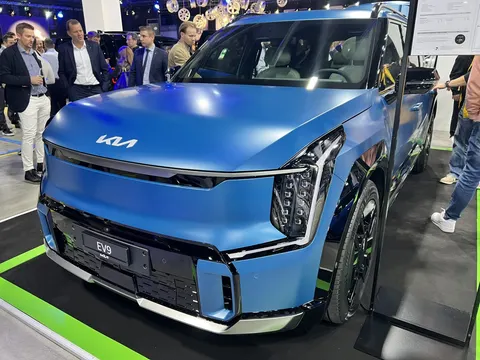
- Battery: 99.8 kWh
- Home coverage: up to 4 to 5 days
- V2X: V2L standard; V2H via Wallbox Quasar 2
- Port: CCS
Battery: 99.8 kWh usable. Potential home coverage: up to four or five days at typical UK household consumption (3,200 kWh/year average). Charging standard: CCS.
Pair with: Wallbox Quasar 2.
Kia EV2
Now on sale in the UK from £27,995, before the Electric Car Grant of up to £3,750, the EV2 is the most affordable entry point into bidirectional-ready Kia ownership. It offers a 42.2 kWh battery with up to 190 miles of range, or a 61.0 kWh long-range battery with up to 275 miles, and V2L is standard. Kia has announced V2G capability for the EV2 platform; UK bidirectional charger support is still to be confirmed, so check with your installer before buying specifically for V2H.
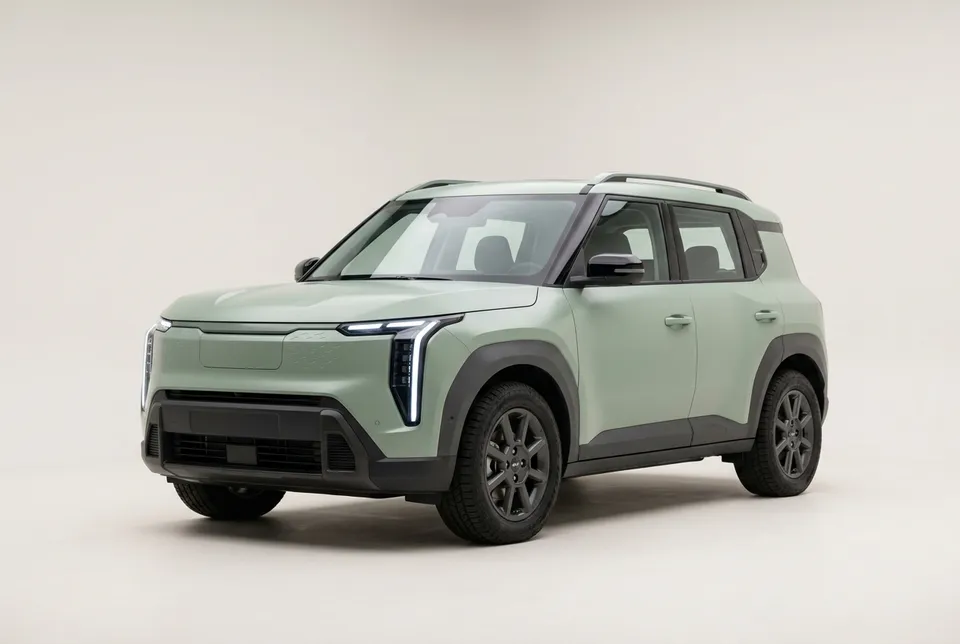
- Battery: 42.2 or 61.0 kWh
- Range: up to 275 miles (61.0 kWh)
- Price: from £27,995 before the Electric Car Grant (up to £3,750)
- V2X: V2L standard; V2G announced, UK charger support TBC
Hyundai IONIQ 5
The IONIQ 5 has V2L built in as standard (3.6 kW from the exterior socket). V2H capability via a compatible bidirectional DC charger is available but installer-dependent in the UK. If you are specifically buying the IONIQ 5 for V2H, confirm hardware compatibility with your chosen charger before purchase. The 800-volt architecture means faster charging in both directions compared to 400-volt competitors.
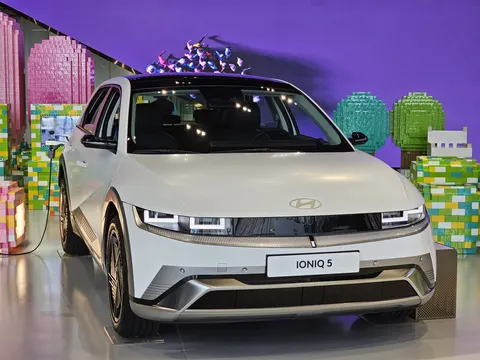
- Battery: 77.4 kWh
- Home coverage: ~3 days
- V2X: V2L standard; V2H installer-dependent
- Port: CCS (800V)
Battery: 77.4 kWh (Long Range). Charging standard: CCS (800V).
Pair with: Wallbox Quasar 2 (confirm current compatibility with your installer).
BYD Dolphin (V2G variant)
The BYD Dolphin is the flagship pairing for the Octopus Power Pack V2G tariff, matched with a V2G-enabled Zaptec Pro charger. Power Pack guarantees free home EV charging provided you plug in for roughly 12 hours a day on 20 days per month and charge less than 210 kWh monthly (equivalent to about 625 miles of driving). Octopus states the tariff saves £620 per year compared with Flexible Octopus and £161 compared with Intelligent Octopus Go.
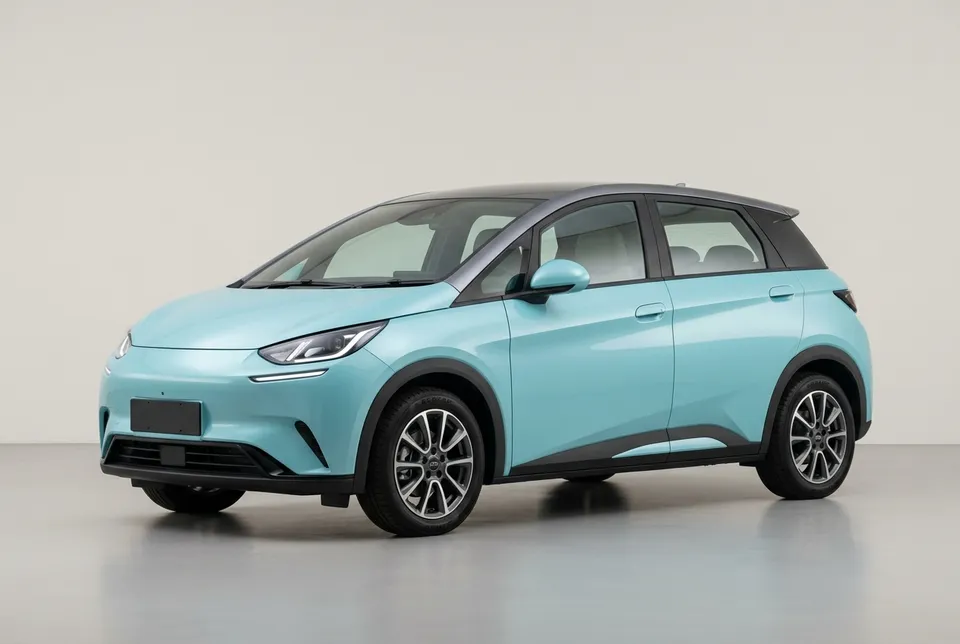
- Battery: ~60 kWh
- Home coverage: ~2 days
- V2X: V2G on Octopus Power Pack with a Zaptec Pro
- Port: CCS
Pair with: Zaptec Pro (V2G-enabled, via Octopus Power Pack).
Renault 5 E-Tech
The Renault 5 E-Tech brings AC bidirectional charging onboard the car itself, at up to 11 kW. This is significant because the inverter is in the car rather than the charger, which means the wallbox can be a simpler and cheaper AC unit. Renault’s UK site now carries a dedicated V2G service section under its Mobilize energy arm, with the Mobilize PowerBox Verso as the compatible hardware. The V2G service extends to other Renault Group models including the Renault 4 E-Tech, Megane E-Tech, and Alpine A290.
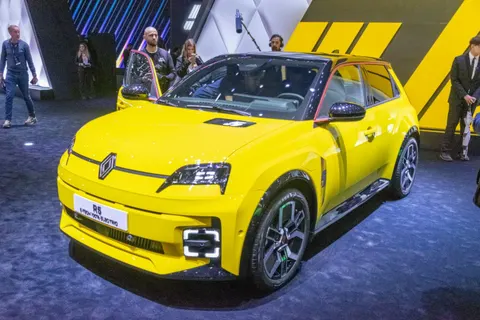
- Battery: 40 or 52 kWh
- V2X: AC bidirectional onboard, up to 11 kW; V2G via Mobilize
- Charger: Mobilize PowerBox Verso
- Port: CCS
Pair with: Mobilize PowerBox Verso.
VW ID.3, ID.4, ID.7 (77 kWh battery)
Volkswagen has announced that ID. models with the 77 kWh battery are “BiDi ready”, including vehicles already delivered, with bidirectional capability unlocked via an over-the-air software update and V2H as the initial focus. V2G (feeding the National Grid) requires additional regulatory framework that is still being finalised. Initial hardware compatibility is with the Hager S10 E Compact home power station. UK rollout timing is still to be confirmed, so treat this as announced rather than something you can order and install today.
If it lands as announced, this is one of the most consequential developments in UK V2H: there are tens of thousands of VW ID. models already on UK roads that would receive V2H capability without their owners buying a new car.
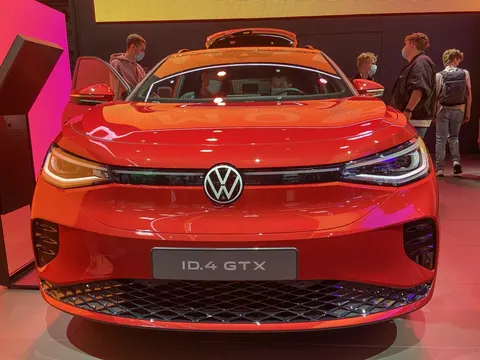
- Battery: 77 kWh
- Home coverage: ~2 to 3 days
- V2X: V2H via OTA software update, announced; UK timing TBC
- Charger: Hager S10 E Compact (initial)
Pair with: Hager S10 E Compact (initial); broader charger compatibility expected.
Mitsubishi Outlander PHEV
The Outlander PHEV was one of the original V2H vehicles in the UK and remains compatible via CHAdeMO. Octopus lists the Outlander PHEV, alongside the previous-generation Nissan Leaf and e-NV200, as compatible with the Power Pack tariff when paired with a Wallbox Quasar v1. CHAdeMO hardware is otherwise being phased out across Europe, so outside the Power Pack route, check whether your preferred installer still stocks and supports CHAdeMO-compatible bidirectional equipment.

- Battery: ~20 kWh (plug-in hybrid)
- Home coverage: less than 1 day
- V2X: V2G via CHAdeMO on Octopus Power Pack with a Wallbox Quasar v1
- Port: CHAdeMO
Pair with: Wallbox Quasar v1 via the Octopus Power Pack tariff, or legacy CHAdeMO bidirectional hardware where still stocked.
Coming in 2026 and beyond (announced but not yet available)
Polestar 3 and Volvo EX90
V2H capability for 400-volt variants has been announced, initially launching in California via the dcbel Ara charger. No confirmed UK launch date as of August 2026. Worth watching if you are a Polestar or Volvo buyer with a longer purchase horizon.
BMW iX3 (Neue Klasse)
BMW announced V2G integration for the new iX3 in Germany from spring 2026, in partnership with E.ON. UK availability is to be confirmed. The BMW Wallbox Professional is the expected charger partner.
Nissan Ariya
Nissan has indicated that bidirectional capability will extend to the Ariya under its energy rollout, though specific UK dates are not yet confirmed. UK deliveries of the standard Ariya are well underway.
V2L capable (not full V2H)
The following models offer V2L, allowing you to send power directly from your vehicle’s stored power to appliances and power tools, but do not currently support full V2H in the UK. Many have the hardware foundation for future V2H via software updates:
- Hyundai IONIQ 6
- Kia EV6
- Kia Niro EV
- Hyundai Kona Electric (65 kWh)
- Ford Mustang Mach-E
- Genesis GV60 and GV70
Tesla note: Tesla is not V2H compatible via any third-party charger. Tesla’s preferred home energy solution is the Powerwall battery system.
Which charger do you need for V2H?
The charger is as important as the car. Every V2H setup requires a certified bidirectional charger. Here are the main options available in the UK in 2026, alongside our comparison of the best home EV chargers for standard one-directional charging.
DC bidirectional chargers
DC chargers put the inverter in the wallbox and communicate directly with the car battery. They deliver higher power and are currently the most established V2H route in the UK.
Wallbox Quasar 2. Price: approximately £6,100 before installation. The highest-profile DC bidirectional charger available in the UK. Supports CCS2, V2H and V2G modes, solar charging integration, and home energy management via the Wallbox app. Maximum output: up to 11.5 kW. Compatible with Kia EV9, Cupra Born, and select other CCS models.
Indra Smart Pro V2H. Developed specifically for the UK market by Welsh manufacturer Indra, this is a DC bidirectional charger focused on V2H rather than V2G. The Indra Smart Pro home EV charger has been widely reviewed against rival units. Indra ran a V2H trial with OVO Energy’s Kaluza platform, making it one of the few chargers with real-world UK data behind it. Contact Indra directly for current pricing and vehicle compatibility.
AC bidirectional chargers
AC bidirectional chargers rely on the car’s own onboard inverter, which means the wallbox is simpler and cheaper. This architecture is where the future of V2H cost reduction sits.
Zaptec Go 2. Launched in the UK in September 2025, the Zaptec Go 2 is the country’s first V2G-ready AC charger on general sale. It supports ISO 15118-20, plug-and-charge, and up to 22 kW three-phase. Crucially, it receives over-the-air updates, so as car manufacturers unlock bidirectional capability on new models, the charger activates those features automatically.
Enphase IQ Bidirectional EV Charger. A tethered CCS unit with integrated microinverters, ISO 15118-20 compliance, and Black Start capability (meaning it can restore power to your home independently following a complete grid outage). Available in the UK as of 2026. Designed to integrate with solar PV systems.
Compatible Nissan home charger. Nissan lists the all-new Leaf as Vehicle-to-Grid enabled when paired with a compatible Nissan home charger; contact Nissan UK for current hardware details and pricing.
The regulatory side: G99 approval and DNO permissions
Every V2H installation in the UK that exports more than 3.68 kW (16A per phase) is classified as generation and storage, which means it requires G99 approval from your local Distribution Network Operator (DNO) before installation.
What G99 approval involves:
- Your installer submits a technical application to your DNO (for example, UK Power Networks, National Grid Electricity Distribution, Northern Powergrid)
- Processing typically takes 30 to 60 working days, though straightforward cases can complete faster
- The DNO assesses whether your local grid has capacity for the additional export
- In areas with constrained grid infrastructure, parts of rural Scotland, the South West, and some dense urban networks, the DNO may refuse export entirely or limit it to 3.68 kW per phase under G100 export limiting conditions
Your installer should handle the G99 application as part of the installation package. Ask for written confirmation that it has been submitted before any work begins.
If you also have solar panels, V2H hardware must be MCS certified to stack Smart Export Guarantee payments on top, and SEG payments can sit alongside a V2G tariff; check the terms of your chosen tariff with the supplier.
What can you actually save with V2H?
The savings potential from V2H depends on your electricity tariff, how much you drive, and how consistently you plug the car in. Below are three realistic scenarios for a UK household in 2026, plus a calculator you can run with your own numbers.
V2H savings calculator
Set your own off-peak rate, peak rate, and discharge pattern to estimate your annual saving and payback period against a Wallbox Quasar 2 install (£7,000 hardware + install).
Defaults reflect Intelligent Octopus Go’s off-peak rate of 8p/kWh, the average July 2026 price cap unit rate of 26.11p/kWh, and 40 kWh discharged per active V2H session. Excludes resilience value of backup power and any future V2G grid export payments.
Scenario 1: Octopus Power Pack (V2G tariff)
Octopus states that the Octopus Power Pack V2G tariff saves £620 per year compared with Flexible Octopus, and £161 per year compared with Intelligent Octopus Go. It also guarantees free home EV charging provided you plug in for roughly 12 hours a day on 20 days per month and charge less than 210 kWh monthly (about 625 miles of driving).
Compatible setups listed by Octopus are a BYD Dolphin with a V2G-enabled Zaptec Pro, or a previous-generation Nissan Leaf, Nissan e-NV200, or Mitsubishi Outlander PHEV with a Wallbox Quasar v1.
Scenario 2: Owning a compatible car, buying your own charger
If you already own a Kia EV9 or a compatible Leaf and buy a Wallbox Quasar 2 (approximately £6,100 plus installation of roughly £600 to £1,000), the hardware outlay is around £7,000. With Intelligent Octopus Go’s 8p/kWh off-peak rate and an average peak unit rate of 26.11p/kWh:
- Charging 40 kWh overnight costs approximately £3.20
- Discharging those 40 kWh of stored energy during peak hours avoids approximately £10.44 of peak electricity
- Net daily saving: approximately £7.24 on an active V2H day
At three active V2H days per week, annual savings reach approximately £1,130. Against a £7,000 hardware investment, payback sits at around 6 years on energy savings alone, before factoring in the resilience value of backup power or any future grid export payments as V2G tariffs mature.
Scenario 3: VW ID. BiDi OTA update
For existing VW ID.3, ID.4, or ID.7 owners with the 77 kWh battery, V2H capability has been announced as a free software update. The only hardware cost would be the compatible Hager S10 E Compact home energy system plus installation. If the UK rollout lands as announced, this could significantly shorten the payback period compared to starting from scratch with a new car.
The honest picture in 2026
V2H has crossed from pilot programme to purchasable product in the UK. The Octopus Power Pack, the Zaptec Go 2, the all-new Nissan Leaf, and the announced VW BiDi OTA update together represent the ecosystem finally cohering into something a UK homeowner can realistically install.
The barriers that remain are real:
- Hardware is still expensive relative to conventional chargers: around £3,700 for a simpler AC unit, £6,000-plus for a DC bidirectional charger, before installation
- The range of type-approved bidirectional hardware on general sale remains narrow; check the ENA Type Test Register before committing to a unit
- G99 approval can take two months and can be refused in constrained grid areas
- Intelligent Octopus Go’s 8p/kWh off-peak rate means conventional smart charging is already cheap, which is the bar V2H economics need to clear
For drivers buying a new car in 2026 who want V2H, the Kia EV2 (from £27,995 before the Electric Car Grant, with V2L standard and V2G announced) and the all-new Nissan Leaf (from £28,849, V2G enabled with a compatible Nissan home charger) are the strongest choices. For existing owners of VW ID. 77 kWh models, the announced free software update would make V2H a low-cost addition once it reaches the UK.
For everyone else, Intelligent Octopus Go at 8p/kWh is the pragmatic starting point, and the cars you are buying today are increasingly arriving with the hardware foundation for V2H that a software update will unlock within the next 12 to 24 months.
Key Takeaways
- In 2026, confirmed UK V2H-capable cars include the all-new Nissan Leaf (3rd gen), Kia EV9, Kia EV2, Hyundai IONIQ 5, BYD Dolphin (via Octopus Power Pack), Renault 5 E-Tech, and VW ID. 77 kWh models via an announced OTA update.
- Bidirectional charging enables your EV to act as both a power source and energy storage for your home, providing backup power during outages.
- Every V2H installation exporting more than 3.68 kW requires G99 approval from your DNO, which can take 30 to 60 working days.
- Bidirectional charger hardware costs range from approximately £3,700 for AC units to £6,100 for the Wallbox Quasar 2 DC charger, before installation.
- The Octopus Power Pack V2G tariff offers free home EV charging with a compatible car and charger, subject to plug-in conditions, and Octopus states it saves £620 per year against Flexible Octopus.
- Intelligent Octopus Go offers off-peak smart charging from 8p/kWh (23:30 to 05:30), which is the benchmark V2H economics have to beat.
- Tesla does not support V2H or V2G through any third-party charger.
Frequently Asked Questions
Which UK electric cars support vehicle-to-home charging in 2026?
How much can V2H save me on my electricity bill?
Do I need DNO approval for a V2H charger?
What is the difference between V2H and V2G?
How long can an electric car power a house?
Is Tesla compatible with V2H or V2G in the UK?
Useful Resources
- V2X Innovation Programme: successful projects — GOV.UK / DESNZ
- Electric Vehicle Smart Charging Action Plan — GOV.UK / DESNZ & Ofgem
- G99 Types B-D Summary Guide — Energy Networks Association
- ENA Type Test Register — Energy Networks Association
- Octopus Power Pack V2G tariff — Octopus Energy
- Intelligent Octopus Go tariff — Octopus Energy
- All-new Nissan Leaf — Nissan UK
- Kia EV2 — Kia UK