Compare home EV chargers side by side
Put any two or three UK home chargers head to head on the things that actually decide it: power, solar handling, cable type, warranty and grant eligibility.
Independent and UK-based. We buy or borrow every charger we review, and we never take payment for a better score.
Choose chargers to compare
Pick two or three. Your selection updates the table and the page address, so you can share it.
No chargers match that search.
| Specification | ||
|---|---|---|
| Max power | 7.4kW | 7.4 kW |
| Cable | Tethered · 6.5m | Tethered 5m |
| Solar compatibility | Yes | Yes, dedicated solar mode |
| Vehicle-to-home (V2H) | No | No |
| Vehicle-to-grid (V2G) | No | No |
| Grant eligible | Yes | Yes |
| Warranty | 3 years | 3 years |
| Dimensions | — | — |
| Tariff integration | — | Intelligent Octopus Go, other tariffs via app |
| Best thing about it | ECO and ECO+ modes divert surplus solar generation to the car instead of exporting it to the grid | — |
| Main drawback | Costs more than several capable alternatives if you don't have solar | — |
| Our verdict | The Zappi is built around solar households. Its ECO and ECO+ modes divert surplus solar generation to the car instead of exporting it, the myenergi app covers scheduling and... | — |

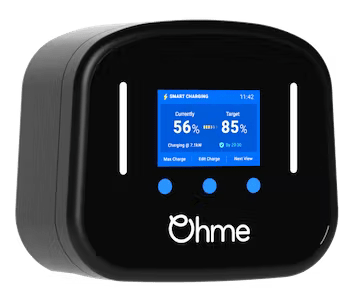
Specifications are a guide and change without notice; always confirm the details with the manufacturer or your installer before buying.
How to read this comparison
Most home charger comparisons come down to four things, and the rest is noise. Start with power. Nearly every domestic unit in the UK is 7.4kW, because that is what a standard single-phase supply will carry. If you see 22kW on the spec sheet, it only matters when your home has a three-phase supply, which the overwhelming majority do not. A 7.4kW charger adds roughly 25 miles of range an hour, so an overnight charge covers far more than the average daily drive.
Next, solar compatibility. This is where chargers genuinely differ. A unit with a dedicated solar mode uses a CT clamp to watch your export and diverts surplus generation into the car automatically. A charger that only offers scheduling cannot do that; it can shift charging to a cheap window, which is useful, but it is not the same thing. If you have panels, or plan to, this row deserves more weight than almost any other.
Then cable. Tethered means the lead is permanently attached, which is quicker day to day and tidier if the charger sits by the driveway. Untethered, sometimes called socketed, means you bring your own cable: better if you have two cars with different connectors, or you want the unit to look neater on the wall of a period property.
Finally, warranty. A charger is a piece of outdoor electrical equipment that has to survive a decade of British weather, so the gap between a three-year and a seven-year warranty is worth real money. Once you have settled on a unit, installation matters just as much as the hardware; the Find an installer buttons in the table take you straight to our directory of vetted local installers.
The green highlight in the table marks the stronger unit for rows we can measure objectively. Where a row is a judgement call, such as our verdict, nothing is highlighted; that is what the full reviews are for.
Popular head-to-heads
The comparisons readers run most often. Each one opens in the tool above.
Comparison tool questions
How many chargers can I compare at once?
You can compare up to three home chargers side by side. Two is usually the clearest way to settle a decision; a third is useful when you are torn between a premium unit and a budget alternative.
Where does the comparison data come from?
Every figure is taken from our own charger reviews, which are compiled from manufacturer specifications and published documentation. Specifications change without notice, so confirm the details with the manufacturer or your installer before you buy.
How much does a home charger cost to install?
Pricing varies enormously with the unit, cable length, your property and any grant you qualify for, which is why we do not publish headline prices. The most reliable figure comes from a quote by an approved installer; our local installer directory lists vetted, EV-specialist firms across 50 UK cities.
What does the green highlight mean?
The green cell marks the stronger charger for that particular row, such as a higher power rating or a longer warranty. It only appears where a row can be measured objectively, so subjective rows like our verdict are never highlighted.
Can I share a comparison with someone else?
Yes. The page address updates as you change your selection, so you can copy the link straight from the address bar or use the copy link button. Whoever opens it sees exactly the same comparison.