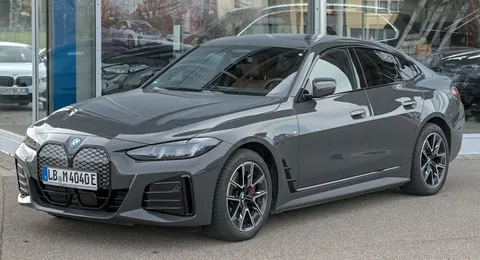
i4 eDrive40
BMW CCS
205kW peak DC is lower than the 800V cars, but BMW's NMC cells maintain a relatively flat charging curve up to around 60% state of charge; real charge times are more consistent than the peak figure alone suggests.
Electric cars
Peak DC charging speed tells you how quickly your car can accept charge at a public rapid charger; the higher the figure, the fewer minutes you spend at each stop. The 800V architecture used by Kia (EV6) and Hyundai (IONIQ 6) enables peak speeds above 200kW, while conventional 400V systems typically top out at around 150kW. Peak speeds assume an ideal battery temperature and a charge level below 80%, so real-world speeds are often lower. The 10-80% charge time is the more useful metric for journey planning, and it is the figure we use throughout this list.
Every model that qualifies for this list, in alphabetical order. Tap any card for the full review and specs.
i4 eDrive40
BMW CCS
205kW peak DC is lower than the 800V cars, but BMW's NMC cells maintain a relatively flat charging curve up to around 60% state of charge; real charge times are more consistent than the peak figure alone suggests.
i4 M50
BMW CCS
Dual-motor M50 shares the same 205kW peak DC charging as the eDrive40 with no compromise on charge speed. The M50 and eDrive40 are identical on charging; what differs is performance output and slightly less WLTP range.
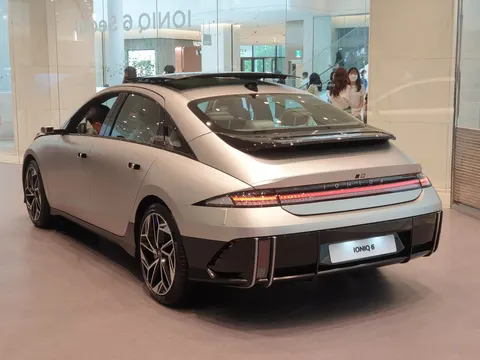
IONIQ 6 Long Range AWD
Hyundai CCS
AWD IONIQ 6 shares the 233kW peak charging rate with the RWD but gives up around 34 miles WLTP. Identical charging speed, dual-motor traction; the right choice when all-weather confidence matters more than maximum range.
IONIQ 6 Long Range RWD
Hyundai CCS
Matches the EV6 on 233kW peak DC charging but leads the entire list on aerodynamic efficiency at 0.21 Cd. More miles between stops and the same speed when you do stop; a strong combination for long-distance drivers.
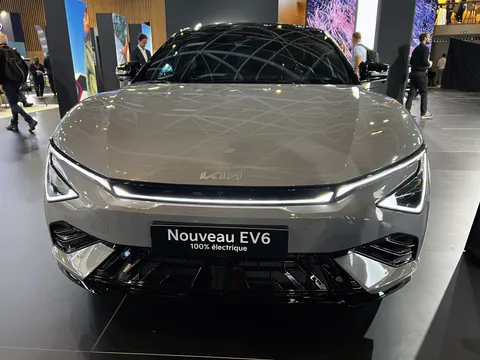
EV6 Long Range AWD GT-Line S
Kia CCS
Same 800V / 233kW charging capability as the RWD with dual-motor AWD added. Identical charging hardware, all-weather traction, and around 28 fewer WLTP miles; choose AWD for the conditions, not the charging speed.
EV6 Long Range RWD
Kia CCS
800V architecture enables 233kW peak DC charging; on a compatible 350kW charger, 10-80% takes around 18 minutes. The RWD setup is also the most range-efficient EV6 variant, so fast charging meets efficient running.
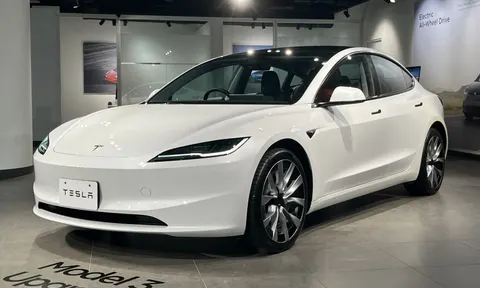
Model 3 Long Range AWD
Tesla CCS
Shares the 250kW Supercharger capability of the RWD with dual-motor AWD. The two variants are identical on charging speed; the AWD adds all-weather traction and the same Supercharger network advantage.
Model 3 Long Range RWD
Tesla CCS
The highest peak charging rate on this list at 250kW, but only on Tesla's V3 Supercharger network. At third-party CCS rapid chargers, real-world speeds are typically 170-200kW. The fastest option for Supercharger users.
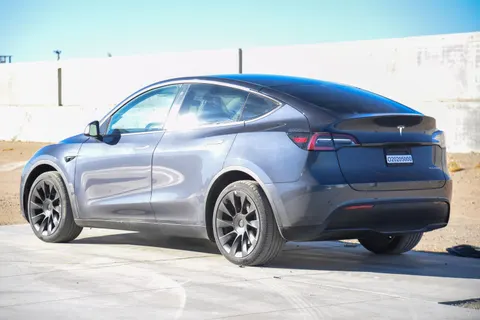
Model Y Long Range AWD
Tesla CCS
250kW on Superchargers combined with the most extensive rapid-charging network in the UK makes this the most practical option for long-distance family trips. SUV packaging and Supercharger access are the joint differentiators.
Model Y Performance AWD
Tesla CCS
Same 250kW Supercharger capability as the Long Range AWD with higher-performance motors. The two Model Y variants are identical on charging hardware; what differs is acceleration and driving character.