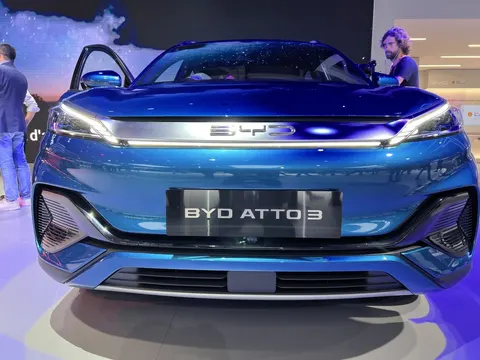
Atto 3 Extended Range
BYD CCS
Same 2.2kW V2L as the Standard Range with the larger 87kWh LFP pack; more stored energy means longer V2L sessions before driving range is affected. LFP chemistry remains safe to use at 100% state of charge.
Electric cars
Vehicle-to-X (V2X) covers any technology that lets your EV export stored energy: to a portable device, your home, or the National Grid. V2L (vehicle-to-load) is the most accessible tier; it powers appliances via a socket with no special installation required. V2H (vehicle-to-home) routes power through your home's electrical system and requires a bidirectional charger and professional installation. V2G goes a step further, exporting to the National Grid via a smart tariff and regulatory approval. V2L is now available on many mainstream EVs; V2H and V2G remain limited to a smaller group of compatible models requiring additional hardware.
Every model that qualifies for this list, in alphabetical order. Tap any card for the full review and specs.
Atto 3 Extended Range
BYD CCS
Same 2.2kW V2L as the Standard Range with the larger 87kWh LFP pack; more stored energy means longer V2L sessions before driving range is affected. LFP chemistry remains safe to use at 100% state of charge.
Atto 3 Standard Range
BYD CCS
LFP battery chemistry means regular V2L use via CCS adaptor does not degrade the pack at the same rate as NMC chemistry. More suitable for frequent V2L use than most rivals at this output level.
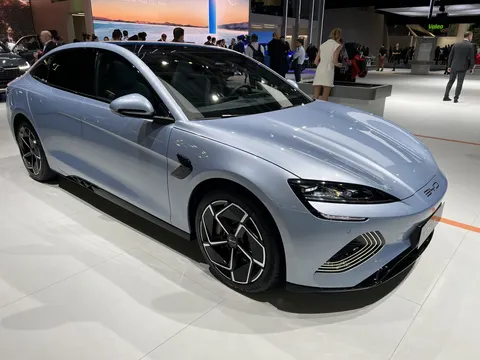
Seal Design RWD
BYD CCS
3.3kW V2L output is higher than the MG4 and BYD Atto 3 variants on this list; the 82.6kWh battery combined with 3.3kW makes this one of the most capable V2L vehicles at its price point.
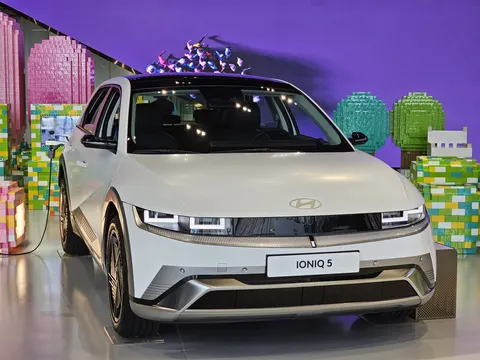
IONIQ 5 Long Range AWD
Hyundai CCS
The IONIQ 5 pioneered mainstream V2L in Europe; a 230V boot socket and CCS adaptor for external use provide 3.6kW. V2L is available across all IONIQ 5 variants at the same output level.
IONIQ 5 Long Range RWD
Hyundai CCS
3.6kW V2L standard on Long Range RWD; the 77.4kWh battery provides ample storage for extended sessions. Same output as the AWD variant; choose RWD for greater range, AWD for all-weather traction.
IONIQ 5 Standard Range RWD
Hyundai CCS
3.6kW V2L on the Standard Range IONIQ 5; V2L is consistent across the full IONIQ 5 line-up, meaning even the entry model delivers the same output level as higher-spec variants.
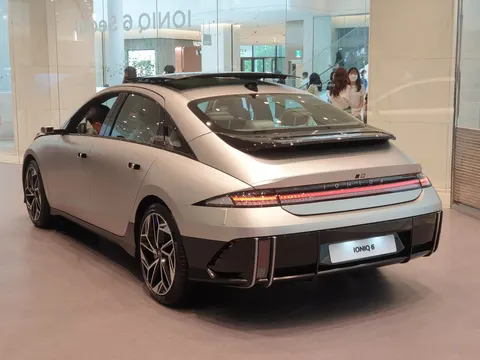
IONIQ 6 Long Range AWD
Hyundai CCS
Same 3.6kW V2L as the RWD IONIQ 6 with dual-motor AWD. All-weather driving capability combined with full V2L output; no reduction in bidirectional power compared to the RWD variant.
IONIQ 6 Long Range RWD
Hyundai CCS
3.6kW V2L via CCS adaptor from the saloon body; the IONIQ 6 is the most aerodynamically efficient V2L vehicle on this list. For owners who want strong range alongside V2L capability, this is the combination.
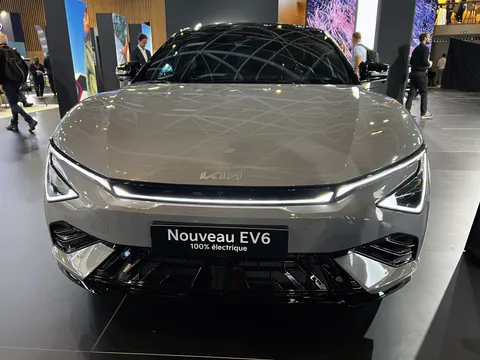
EV6 Long Range AWD GT-Line S
Kia CCS
Same 3.6kW V2L as the RWD with dual-motor AWD added. V2L capability is identical across the EV6 drivetrain range; the AWD variant adds all-weather traction without any reduction in output.
EV6 Long Range RWD
Kia CCS
3.6kW V2L via CCS with a proprietary adaptor, the highest V2L output of any mid-size EV at this price in the UK. Enough to run a kettle, TV, and laptop from a single mid-sized family car.
EV6 Standard Range RWD
Kia CCS
3.6kW V2L even on the entry EV6; bidirectional power output is consistent across the entire EV6 line-up, making even the most affordable variant a capable mobile power source.
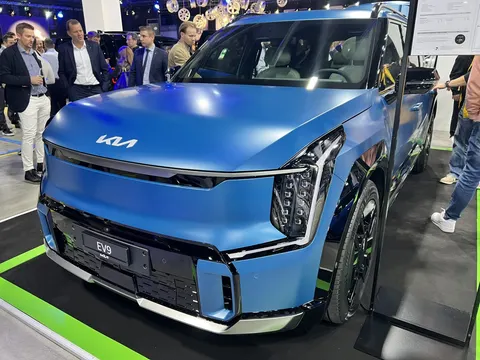
EV9 Air RWD
Kia CCS
3.6kW V2L from the entry EV9; the 76.1kWh battery still provides substantial stored energy for extended V2L sessions. Maximum output from the same socket as the AWD variants.
EV9 Earth AWD
Kia CCS
3.6kW is the highest V2L output on this list; enough to run a kettle, TV, and laptop simultaneously. The 100kWh battery backs that output with extended duration before depleting your driving range.
EV9 GT-Line S AWD
Kia CCS
Matches the Earth on 3.6kW V2L with the same 100kWh battery. The GT-Line S adds sportier specification; V2L output and duration are identical to the Earth trim.
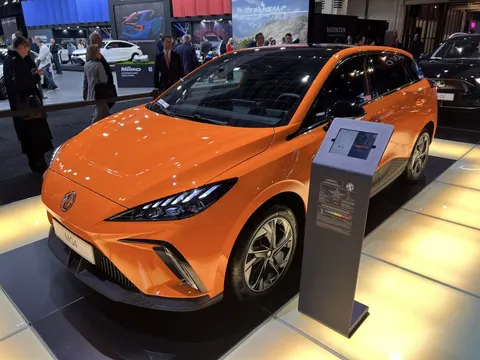
MG4 EV SE Long Range
MG CCS
2.2kW V2L is more modest than Kia and Hyundai rivals at 3.6kW, but sufficient for a laptop, lights, and a small appliance. The value case is strong: V2L at this price undercuts every 3.6kW option on the list.
MG4 EV Trophy Long Range
MG CCS
2.2kW V2L standard on the Trophy alongside the 77kWh battery and 281 miles WLTP. The MG4 range brings V2L to a price bracket where Kia and Hyundai equivalents are not available.
MG4 EV XPower AWD
MG CCS
2.2kW V2L on the dual-motor XPower; AWD performance and bidirectional capability at a price that undercuts most comparable vehicles with similar V2L output. Performance model with no V2L compromise.
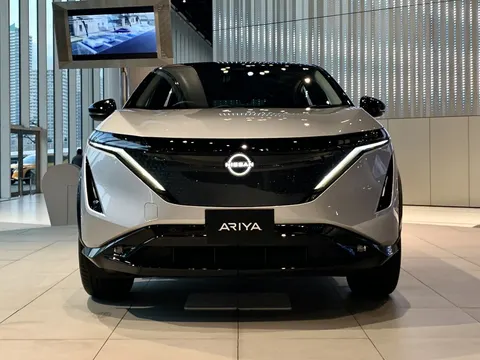
Ariya 63kWh Evolve
Nissan CCS
1.5kW is the lowest V2L output on this list; adequate for phones, laptops, and low-wattage devices, but not sufficient for high-draw appliances. Useful for portable power on the move.
Ariya 87kWh e-4ORCE Evolve
Nissan CCS
Same V2L capability as the FWD 87kWh Evolve with dual-motor AWD added. All-weather driving combined with V2L output from an 87kWh battery; no compromise on either capability.
Ariya 87kWh Evolve
Nissan CCS
The larger 87kWh battery extends V2L session duration versus the 63kWh variant; more stored energy means more time powering devices before your driving range is affected.

Leaf e+ Acenta
Nissan CHAdeMO
The most affordable route into full V2G and V2H capability in the UK. CHAdeMO protocol supports both Octopus Power Pack and home backup via a compatible bidirectional charger; entry Leaf spec, full bidirectional capability.
Leaf e+ N-Connecta
Nissan CHAdeMO
Same CHAdeMO V2G and V2H architecture as the Tekna at a lower price point. Full bidirectional capability is retained; what you give up versus the Tekna is specification level, not battery technology.
Leaf e+ Tekna
Nissan CHAdeMO
The most fully bidirectional mainstream EV in the UK; CHAdeMO protocol enables both V2G and V2H via a compatible charger such as the Wallbox Quasar 2, and it is eligible for Octopus Power Pack. Full grid interaction at the highest Leaf spec level.
The three vehicle-to-X technologies are often used interchangeably, but they describe very different levels of capability and require very different equipment.
V2L (vehicle-to-load) is the simplest tier. Your EV exports power via a socket, either built into the car or accessed via an adaptor connected to the charging port, and you plug devices or appliances directly into it. No charger installation is required; the car handles everything. Output levels on this list range from 1.5kW (Nissan Ariya 63kWh) to 3.6kW (Kia and Hyundai models). At 2.2kW you can run a laptop, lights, and a small appliance simultaneously. At 3.6kW you can add a kettle or a portable heater. V2L is useful for camping, powering tools on a job site, or keeping essential devices running during a power cut if you are near your car.
V2H (vehicle-to-home) is a significantly larger step. Rather than powering individual devices, V2H routes your car's battery power through your home's electrical system. Done correctly, it can power your whole home from the car's battery during a grid outage. It requires a bidirectional charger (currently costing approximately £3,700-£6,100 depending on the model) and professional installation by a qualified electrician. You also need G99 approval from your Distribution Network Operator (DNO) before the system can export power; this process takes 30-60 working days and must be initiated before installation. V2H also requires DNO permission for any export above 3.68kW.
V2G (vehicle-to-grid) extends V2H by allowing the car to sell surplus stored energy back to the National Grid via a smart tariff. In the UK in 2026, Octopus Power Pack is the only mainstream V2G tariff product available. V2G requires all the same equipment and approvals as V2H, plus a smart meter and enrolment in a compatible tariff. The financial case for V2G is stronger than for V2H alone; Octopus Power Pack data indicates savings of approximately £620 per year compared to a standard Flexible Octopus tariff, based on charging off-peak and exporting during peak periods.
Practical guide: if you want to power a camping device or a tool on a job site, V2L is all you need and it comes built into many of the vehicles on this list at no extra cost. If you want to use your car to offset home energy bills or provide backup power during outages, V2H requires hardware investment of approximately £4,200-£7,100 including installation, plus the regulatory approval process. V2G adds income potential on top of that.
V2H and V2G are more involved than plugging in a charge cable. Here is the full list of what you need before the system can work.
1. A compatible EV. Not all EVs support V2H or V2G. In the UK, the Nissan Leaf e+ is currently the primary mainstream option with full bidirectional capability. CHAdeMO-protocol Leaf models are compatible with the Wallbox Quasar 2 and Octopus Power Pack. Some newer models are adding CCS bidirectional capability via software updates; verify the current status of specific models before purchasing on that basis.
2. A bidirectional charger. Standard EV wallboxes only charge in one direction. A bidirectional charger converts the car's DC battery output back to AC for use in the home. Compatible units include the Wallbox Quasar 2 and Zaptec Go 2; costs range from approximately £3,700 for AC-coupled units to over £6,100 for DC units. Prices change; treat these as indicative figures and obtain a current quote from an installer.
3. Professional installation. A bidirectional charger must be installed by a qualified electrician with experience in EV charger installation. The installation typically includes integration with your consumer unit (fuse board) and costs approximately £500-£1,000 on top of the charger hardware.
4. G99 approval from your DNO. Before your system can export power, you must apply to your Distribution Network Operator for approval under Engineering Recommendation G99. This process takes 30-60 working days and must be completed before installation begins. Your installer can typically handle the application on your behalf.
5. A smart meter (for V2G). Octopus Power Pack, the UK's only mainstream V2G tariff, requires a smart meter to monitor real-time grid demand and manage when the car exports and imports energy. Most UK homes already have a smart meter, but check before proceeding.
For comparison, a home battery system (BESS) with comparable usable storage typically costs £8,000-£15,000 including installation. The car battery is already paid for; the incremental cost for V2H is the charger and installation at approximately £4,200-£7,100.
The financial case depends on which tier of V2X you use.
V2L has no equipment cost and no direct financial return in the conventional sense; the saving is situational. Powering tools on a job site from the car rather than renting a generator, running a campsite without a hook-up, or keeping a fridge and phone charged during a power cut all have a practical value that avoids specific costs, but there is no tariff income.
V2H generates savings by charging the car during off-peak electricity periods (typically overnight at a cheaper rate) and using that stored energy to power the home during more expensive peak periods. Estimated annual savings with V2H range from approximately £200 to £850 per year depending on usage, energy prices, and how consistently you manage the charge and export cycles. A 60kWh usable battery can power the average UK home (which uses approximately 8.8kWh per day) for around two full days.
V2G adds the ability to sell stored energy back to the National Grid during high-demand periods. Octopus Power Pack data indicates savings of approximately £620 per year compared to a standard Flexible Octopus tariff for V2G participants. Note that this figure is based on current tariff rates and will vary with energy market conditions; treat it as an approximate indication rather than a guarantee.
Payback calculation: with V2G savings of approximately £620 per year and equipment and installation costs of approximately £5,000 (mid-range), the payback period is approximately 8 years without factoring in other savings or changes in energy prices. The payback shortens if you also have solar panels (additional stored energy to manage) or if your household has high energy consumption. Confirm current Octopus Power Pack terms and pricing before making purchasing decisions, as these change with market conditions.
V2L (vehicle-to-load) powers appliances directly via a socket on the car; no installation required. V2H (vehicle-to-home) routes battery power through your home's electrical system using a bidirectional charger; requires installation and DNO approval. V2G extends V2H by allowing the car to export energy to the National Grid under a smart tariff. Each tier requires progressively more equipment and regulatory steps.
The Nissan Leaf e+ (all variants on this list) is the primary mainstream EV with full V2H capability in the UK via the CHAdeMO protocol. Some newer models are adding CCS bidirectional capability, but availability is limited and subject to software updates; verify current status with the manufacturer before purchasing on the basis of V2H support.
Yes. A standard EV wallbox only charges in one direction. V2H requires a bidirectional charger such as the Wallbox Quasar 2 or Zaptec Go 2, professionally installed and approved by your DNO. Costs range from approximately £3,700 to over £6,100 for the charger hardware, plus £500-£1,000 for installation. Confirm current prices with an installer.
G99 approval from your Distribution Network Operator typically takes 30-60 working days. The application must be submitted and approved before your bidirectional charger is installed. Your installer can usually handle the application on your behalf as part of the installation process.
Octopus Power Pack data indicates savings of approximately £620 per year compared to a standard Flexible Octopus tariff for V2G users. This figure is based on current tariff rates and typical usage patterns; it will vary with energy prices and how consistently you use the system. Treat it as an approximate benchmark and verify current figures with Octopus before making a purchasing decision.
With a V2H-capable system installed, yes. A 60kWh usable battery can power the average UK home (approximately 8.8kWh per day) for around two full days. Whether it powers your whole home or only essential circuits depends on how the installation is configured; discuss your requirements with a qualified installer before specifying the system.
On an incremental basis, yes. The car battery is already paid for; the additional cost for V2H capability is the bidirectional charger and installation, approximately £4,200-£7,100. A standalone home battery system (BESS) of comparable capacity typically costs £8,000-£15,000 including installation. The trade-off is that the car's battery is unavailable for home use while you are driving; a BESS is always available. If you have a second vehicle or mostly drive short distances, the V2H approach can be significantly more cost-effective.
V2G involves additional charge and discharge cycles beyond normal driving use. The extent of additional degradation depends on how intensively the system is managed; smart V2G systems such as Octopus Power Pack are designed to minimise unnecessary cycling. V2L use from NMC batteries involves additional cycles that contribute to long-term degradation at a modest rate; LFP batteries (BYD models) are generally more tolerant of additional cycling. For most users, the incremental degradation from managed V2G use is small relative to normal driving over the battery's warranty period.